Supercapacitors finally get a practical upgrade📷 Published: Mar 24, 2026 at 12:00 UTC
- ★Porous carbon cuts self-discharge in supercapacitors
- ★High-voltage gains shrink gap with batteries
- ★Real-world tradeoffs remain for industrial adoption
Supercapacitors have long been the awkward middle child of energy storage—too weak for batteries’ endurance, too complex for capacitors’ simplicity. Their double-layer capacitance design bridges a gap but brings frustrating tradeoffs: rapid self-discharge, voltage limits, and bulk that make them impractical for anything beyond niche applications like regenerative braking or backup power.
Now, research into porous carbon electrodes suggests a path forward. By tweaking the material structure, teams are reporting supercapacitors with significantly lower self-discharge rates and higher voltage tolerances—two of the biggest barriers to wider use. The numbers aren’t just incremental: early lab results show voltage ceilings nearing 4V (up from the typical 2.7V–3V range) and energy retention stretching from days to weeks.
For engineers, this isn’t just a spec bump. It’s a potential shift in how energy storage is partitioned in systems where weight, cycle life, and charge speed matter more than raw capacity. Think drones, industrial IoT sensors, or even electric vehicle subsystems where batteries are overkill but traditional capacitors fall short. The question isn’t whether this works in a lab—it’s whether the gains survive real-world thermal stress, cost scaling, and the inevitable tradeoffs in power density.
The spec sheet improvement that might actually change designs📷 Published: Mar 24, 2026 at 12:00 UTC
The spec sheet improvement that might actually change designs
The competitive landscape here is messy. Startups like Skeleton Technologies and CAP-XX have spent years pitching supercapacitors as battery killers, only to hit walls in energy density and price. Meanwhile, lithium-ion continues to improve in areas supercaps can’t touch, like volumetric efficiency. This new porous carbon approach doesn’t erase those gaps—but it might carve out a sustainable niche where ultra-fast charging and million-cycle lifespans justify the compromises.
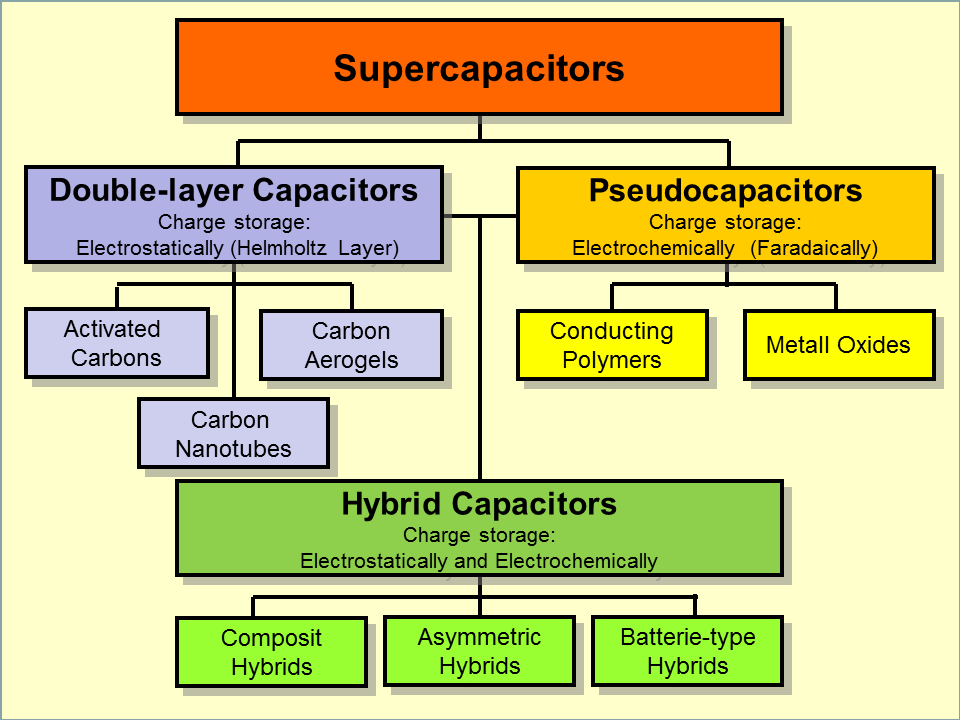
User reality checks are already emerging. Early adopters in grid stabilization note that even with better specs, supercaps still require complex power management to avoid wasting energy. And for all the talk of ‘bridging the gap,’ most applications still need both batteries and supercaps—just in smarter configurations. The ecosystem effect here isn’t replacement; it’s hybridization, where supercaps handle peak loads while batteries cover the baseline.
What’s missing from the hype? Durability data under repeated high-voltage cycles, real-world thermal performance, and—crucially—a clear cost curve. Porous carbon isn’t rare, but fabricating it at scale with consistent pore sizes is. If the price per farad ends up 20% higher than existing solutions, the ‘upgrade’ becomes a non-starter for cost-sensitive markets like consumer electronics.