Bourbon waste could power your next gadget—seriously
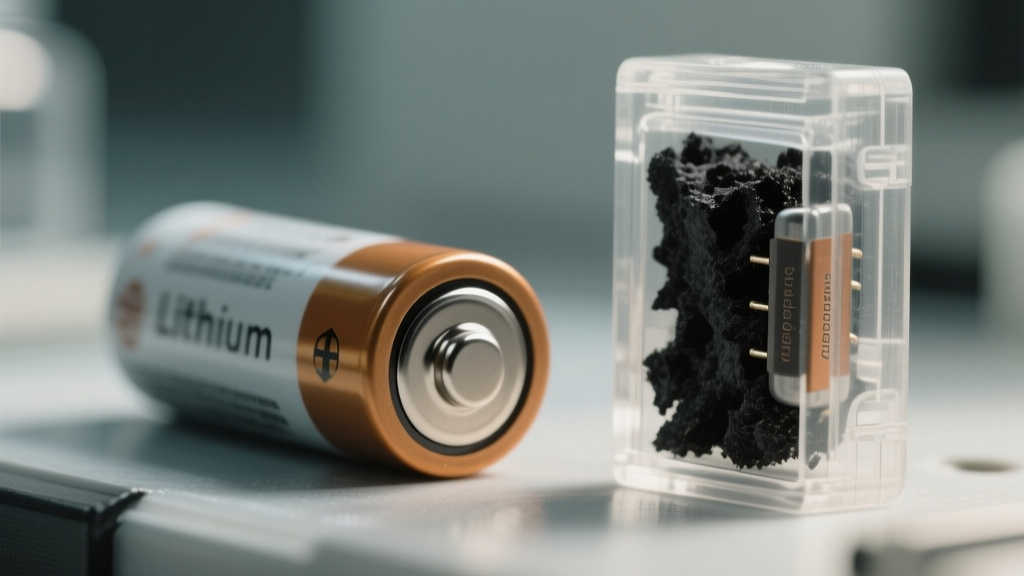
Bourbon waste could power your next gadget—seriously📷 Published: Mar 25, 2026 at 12:00 UTC
- ★Distillery sludge becomes high-performance carbon
- ★Supercapacitors from whiskey byproducts cut e-waste
- ★Sustainability claim meets real-world cost barriers
The next battery breakthrough might come from a distillery’s dumpster. Chemists at the University of Kentucky have confirmed what sounds like a bar bet: hydrothermal carbonization can transform bourbon’s sloppy stillage—the grainy, watery waste left after distillation—into activated carbon primed for supercapacitors. No, this isn’t a gimmick. The process, detailed in ACS Sustainable Chemistry & Engineering, skips the usual fossil-fuel-derived carbon feedstocks, offering a path to energy storage that’s both high-performance and, theoretically, greener.
The numbers aren’t just theoretical. Activated carbon from bourbon waste matched commercial counterparts in electrochemical tests, with surface areas exceeding 1,500 m²/g—critical for supercapacitor efficiency. For manufacturers, this means a potential drop-in replacement for traditional carbon, but with a sustainability story to pitch. For users, it’s the promise of faster-charging, longer-lasting devices with a lower environmental tab.
Yet the real test isn’t in the lab. It’s in the supply chain. Kentucky’s bourbon industry produces millions of gallons of stillage annually, but turning that into a reliable carbon source demands consistency. Distilleries aren’t chemical plants. Batch variability, seasonal production, and the cost of purification could turn this elegant solution into a logistical headache.

The messy economics behind turning booze leftovers into energy storage📷 Published: Mar 25, 2026 at 12:00 UTC
The messy economics behind turning booze leftovers into energy storage
The market context complicates the narrative. Supercapacitors already fight an uphill battle against lithium-ion batteries, which dominate thanks to energy density and entrenched infrastructure. Even with bourbon-derived carbon, supercapacitors won’t replace batteries—they’ll supplement them, excelling in high-power, short-duration applications like regenerative braking or grid stabilization. The question isn’t whether this carbon works, but whether it’s cheaper or better enough to justify switching.
Early signals suggest the sustainability angle might be the strongest play. If brands like Alltech—already repurposing distillery waste for animal feed—can partner with energy storage firms, the circular economy story writes itself. But green premiums only go so far. The DOE’s Advanced Manufacturing Office notes that supercapacitor adoption hinges on cost parity first, eco-benefits second.
Then there’s the user reality: no one buys a gadget because its capacitor came from whiskey. They care about charge times, lifespan, and price. If bourbon carbon trims costs by 10% or boosts cycle life by 20%, that’s a spec-sheet win. If it’s just a ‘sustainable’ upsell with no tangible benefit, it’s a niche curiosity. The tech press is already skeptical of greenwashing in hardware. This had better deliver.
For now, the most practical impact might be in industrial applications, where supercapacitors’ rapid charge/discharge cycles are non-negotiable. Think wind turbines smoothing power fluctuations or data centers handling micro-outages. Here, a 5% efficiency gain from bourbon carbon could justify the switch—if the supply chain holds up.