Ghana’s 200 MW battery bet: Storage at grid scale or just specs?
Ghana’s 200 MW battery bet: Storage at grid scale or just specs?📷 Published: Mar 24, 2026 at 12:00 UTC
- ★200 MW storage tender targets 20x current capacity
- ★Competitive bidding may lower costs—but not guarantees
- ★Renewables integration hinges on execution, not announcements
Ghana’s plan to procure 200 MW of battery storage—20 times its current 10 MWh capacity—sounds like a leap forward. But the devil is in the deployment. The Ministry of Energy and Green Transition will open competitive bidding, a move that could drive down costs but offers no certainty on timelines or integration. For context, Ghana’s entire grid relies heavily on hydropower and thermal plants, with solar and wind contributing just ~3% of its mix. Battery storage at this scale isn’t just about backup; it’s about smoothing intermittency from renewables that don’t yet exist at scale.
The numbers are striking, but the practical impact hinges on two things: who wins the bids and how the storage plugs into the grid. Competitive processes often favor established players like Sungrow or Fluence, whose turnkey solutions dominate African markets. Yet local firms—if they can compete—might tailor systems to Ghana’s unique demand curves, where evening peaks strain an already fragile grid. The risk? A race to the bottom on price that sacrifices durability or local adaptability.
This isn’t Ghana’s first storage rodeo. A 2021 World Bank-funded 5 MW/10 MWh pilot in Navrongo showed promise but also exposed gaps: batteries degraded faster than expected in tropical heat, and grid operators struggled to monetize ancillary services. The new 200 MW target dwarfs that experiment—but scale alone won’t fix operational blind spots.
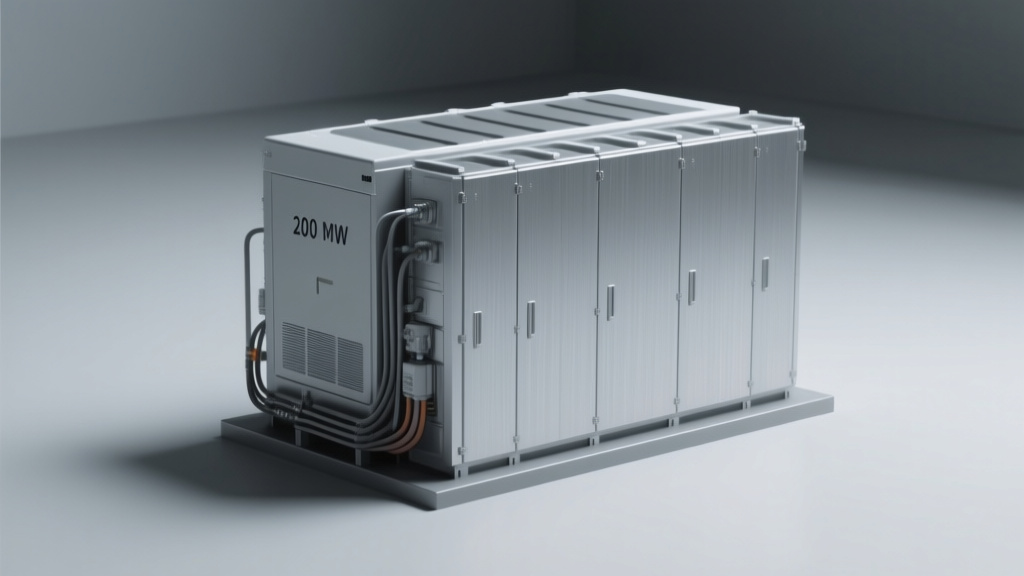
The gap between a 20x capacity jump and real grid impact📷 Published: Mar 24, 2026 at 12:00 UTC
The gap between a 20x capacity jump and real grid impact
For users, the promise is simpler: fewer blackouts and lower costs. Ghana’s residential tariffs are already among Africa’s highest, and businesses face crippling reliability issues. If deployed strategically—say, pairing storage with existing solar farms—the 200 MW could shave peak-demand costs by 10–15%, per IRENA’s modeling for similar markets. But that ‘if’ is doing a lot of work.
The bigger play here is renewables integration. Ghana’s 2023 Energy Transition Plan targets 10 GW of renewables by 2040—a pipe dream without storage to firm up variable generation. Yet the 200 MW figure, while impressive on paper, is a drop in the bucket for a country with 16 GW of installed capacity. The real test will be whether this procurement triggers a domino effect: more storage tenders, clearer grid codes for renewables, and—crucially—private sector confidence to invest in wind and solar.
Early signals suggest the government is serious. The competitive bidding framework mirrors successful models in South Africa and Morocco, where transparent auctions cut solar prices by 40% in five years. But Ghana’s grid isn’t Morocco’s. Its transmission losses hover around 8%, and dispatch priorities still favor baseload thermal. Without reforms to grid access and pricing, even 200 MW of batteries might end up as expensive wall art.