Invisible malware hides in GitHub repos—using Unicode tricks
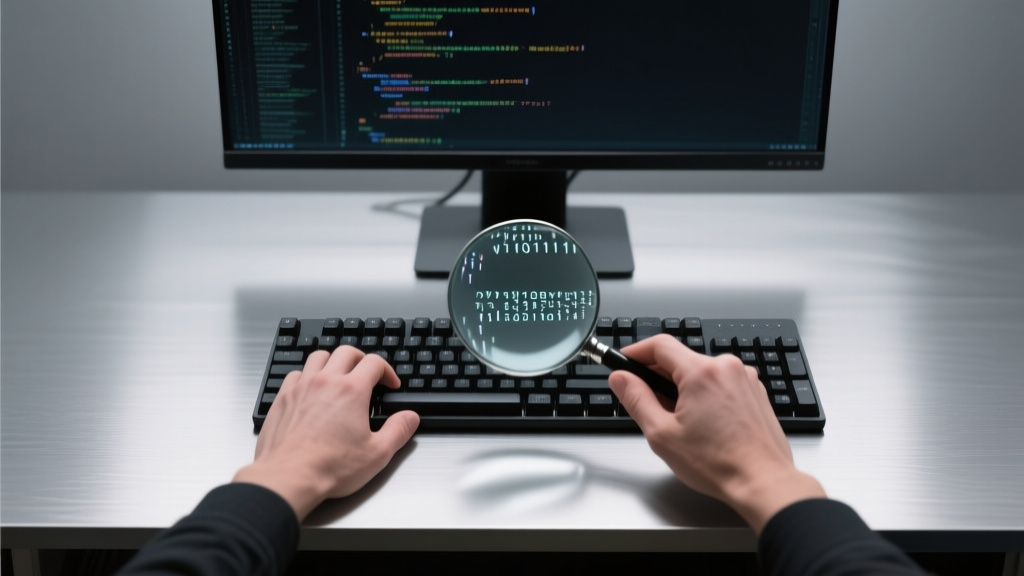
A developer's hands hovering over a mechanical keyboard, a magnifying glass revealing invisible Unicode characters embedded between visible lines of📷 Photo by Tech&Space
- ★151 GitHub repos infected via zero-width Unicode
- ★VS Code and terminals fail to detect hidden code
- ★Blockchain exfiltrates secrets without traditional alerts
The Glassworm attack isn’t just another supply chain breach. It weaponizes Unicode’s Private Use Area (PUA), a range of characters designed for custom fonts but repurposed here to hide malicious payloads in plain sight. These characters render as zero-width spaces—undetectable in VS Code, JetBrains IDEs, or terminal outputs, yet executed as valid code. The attack’s reach spans 151 repositories, targeting developers who unknowingly clone or depend on infected projects.
Blockchain isn’t just the exfiltration method; it’s the attack’s stealth layer. Stolen credentials, API tokens, and environment secrets are encoded into transactions on public ledgers, blending with legitimate traffic. Unlike traditional C2 (command-and-control) servers, blockchain-based exfiltration lacks a single takedown point—security researchers note it’s nearly impossible to trace without specialized tooling.
This isn’t a flaw in GitHub or VS Code’s design. It’s an exploit of how all modern editors handle Unicode—a standard meant for flexibility, now a vector for deception. The attack’s simplicity is its power: no complex obfuscation, just characters that editors ignore but compilers obey.

A tangle of translucent fibers and thin cables viewed in extreme macro, some strands clearly severed and unraveling at the edges, resting on a📷 Photo by Tech&Space
The supply chain attack that exploits what editors can’t see
For developers, the immediate cost isn’t just compromised secrets—it’s the erosion of trust in open-source dependencies. A 2023 Sonatype report found 96% of codebases contain open-source components; Glassworm proves even vetted repos can harbor invisible threats. Teams now face a choice: manually audit every dependency (an impractical burden) or rely on tools that don’t yet exist to flag zero-width Unicode abuse.
The broader industry impact cuts deeper. This attack exposes a blind spot in static application security testing (SAST) tools, which scan for malicious patterns, not invisible characters. Vendors like Snyk and Checkmarx are racing to update detectors, but the cat-and-mouse game favors attackers—Unicode’s PUA range offers 6,400+ characters to exploit. Regulators may soon demand Unicode-aware audits, adding friction to an already strained DevOps pipeline.
Most damning? The fix isn’t technical—it’s cultural. Developers must now treat whitespace as a threat vector, a mental shift akin to the early days of SQL injection awareness. Yet unlike SQLi, this attack leaves no logs, no error messages, just silent compromise.