Solar’s 30% efficiency leap—why it matters more than specs
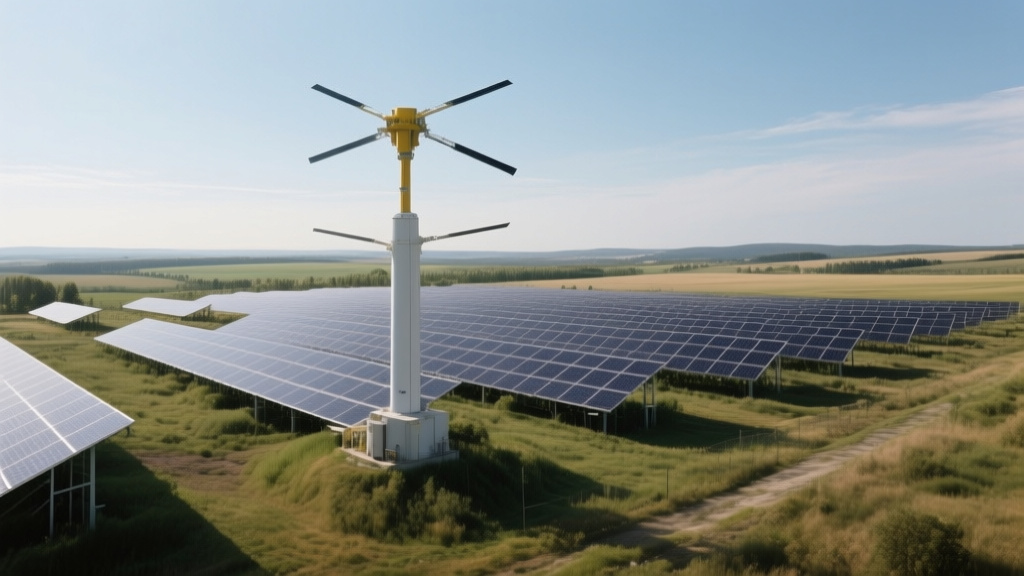
ultra-realistic documentary photography, wide environmental establishing shot, subject small in large context, maximum clarity, razor-sharp edges, no📷 Photo by Tech&Space
- ★30.02% efficiency in perovskite-silicon tandem cells
- ★Nanoparticle reflectors boost middle-cell light absorption
- ★EPFL-CSEM breakthrough targets cost, not just performance
Solar’s efficiency race just got a hard number: 30.02%, achieved in a perovskite-silicon tandem cell by teams at Switzerland’s EPFL and CSEM. The jump comes from three practical tweaks—improved perovskite crystal uniformity, enhanced light absorption in the middle layer via nanoparticle reflectors, and reduced energy loss at cell interfaces. Unlike lab curiosities that fade under real-world conditions, this design targets manufacturability, not just peak performance.
The real story isn’t the percentage—it’s the how. Perovskite-silicon tandems have long promised to outpace traditional silicon by stacking layers that capture different light wavelengths. But until now, scaling them meant trading efficiency for stability or cost. EPFL’s approach sidesteps that by focusing on process improvements (like controlling crystal growth at lower temperatures) that could translate to existing production lines. That’s critical: Oxford PV, a commercial player in this space, has struggled to push its 28.6% cells into mass production.
For solar farms and rooftop installers, the math is simple: even a 1–2% efficiency bump can cut system costs by reducing the number of panels, racking, and land needed. But the catch? Perovskites still face durability questions—this cell’s longevity under heat and humidity remains untested outside the lab. The industry’s reaction so far is cautious optimism, with manufacturers waiting for data on degradation rates before retooling factories.
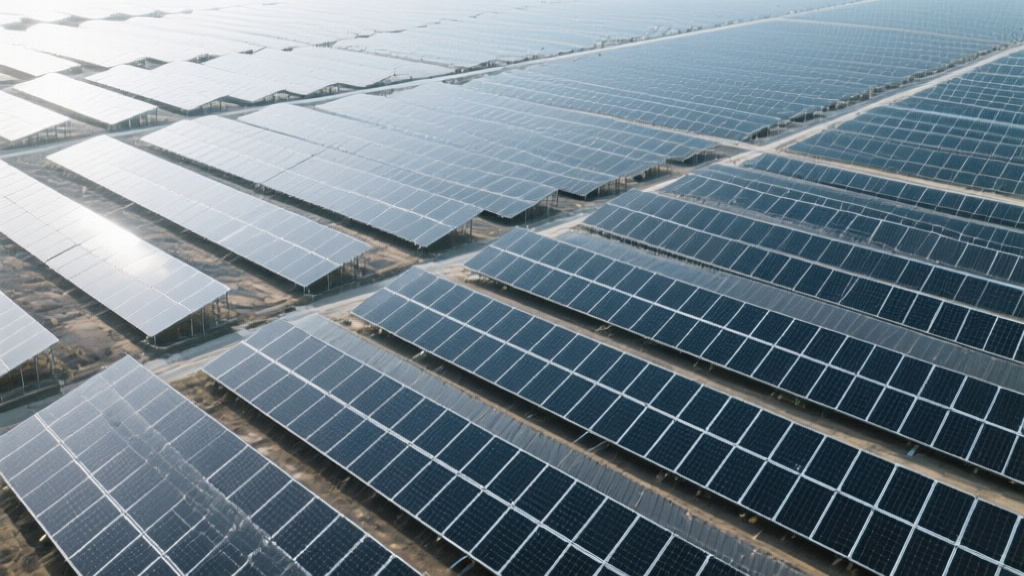
A top-down overhead bird's-eye view of a large-scale solar farm featuring rows of newly installed perovskite-silicon triple-junction solar panels.📷 Photo by Tech&Space
The price of progress isn’t just lab numbers—it’s manufacturing reality
The competitive ripple is already visible. Chinese panel giants like LONGi and JinkoSolar dominate with silicon-only cells hovering around 24% efficiency, but they’re investing heavily in perovskite R&D. If EPFL’s design proves stable, it could force a shift: either license the tech or risk ceding the high-efficiency market to startups. Meanwhile, European and U.S. players—like Qcells—might leverage this as a chance to differentiate on innovation, not just price.
For homeowners and utilities, the immediate impact is negligible. Today’s residential panels average 20–22% efficiency, and replacing them early for a 30% cell makes no financial sense. But the long-term play is clearer: if these tandems hit the market by 2026 (a conservative estimate), they could drop the levelized cost of solar energy by 5–10%, accelerating payback periods. The wild card? Supply chains. Perovskites rely on lead and rare halides—materials with volatile pricing and geopolitical baggage.
The breakthrough’s quietest effect may be on energy storage. Higher-efficiency panels reduce the need for oversized battery systems in off-grid setups, lowering upfront costs for microgrids in sun-rich, infrastructure-poor regions. That’s not a spec-sheet win—it’s a deployment win.