MeerKAT’s rare triple-double galaxy forces a rethink of black hole jets

MeerKAT’s rare triple-double galaxy forces a rethink of black hole jets📷 Published: Apr 14, 2026 at 10:29 UTC
- ★Seventh known triple-double radio galaxy challenges jet recurrence models
- ★MeerKAT’s precision maps 7.5-billion-light-year-old cosmic anomaly
- ★Supermassive black hole’s erratic behavior hints at unseen astrophysics
Astronomers using South Africa’s MeerKAT radio telescope have cataloged an object so rare it defies easy classification: J022248−060934, a galaxy with three distinct pairs of radio lobes extending from its core. This isn’t just another active galactic nucleus (AGN) spraying plasma into the void—it’s the seventh confirmed triple-double radio galaxy (TDRG) ever observed, a subclass so scarce that each discovery forces a recalibration of how we model supermassive black hole behavior.
The structure suggests a black hole that doesn’t just flicker on and off but repeatedly reconfigures its jets over cosmic timescales. Published in the Monthly Notices of the Royal Astronomical Society on February 25, the paper outlines how MeerKAT’s sensitivity resolved lobes spanning millions of light-years, each pair marking a separate epoch of activity. Unlike typical double-lobed radio galaxies, TDRGs like this one imply interrupted or cyclical jet production—a phenomenon current theories struggle to explain without invoking exotic scenarios like black hole mergers or accretion disk instabilities.
What makes J022248−060934 exceptional isn’t just its rarity but its distance: at ~7.5 billion light-years, it’s a relic from when the universe was half its current age. This places its jet activity squarely in the era when galaxies were still assembling, offering a direct probe of how early supermassive black holes regulated their growth—and how often they restarted the process.
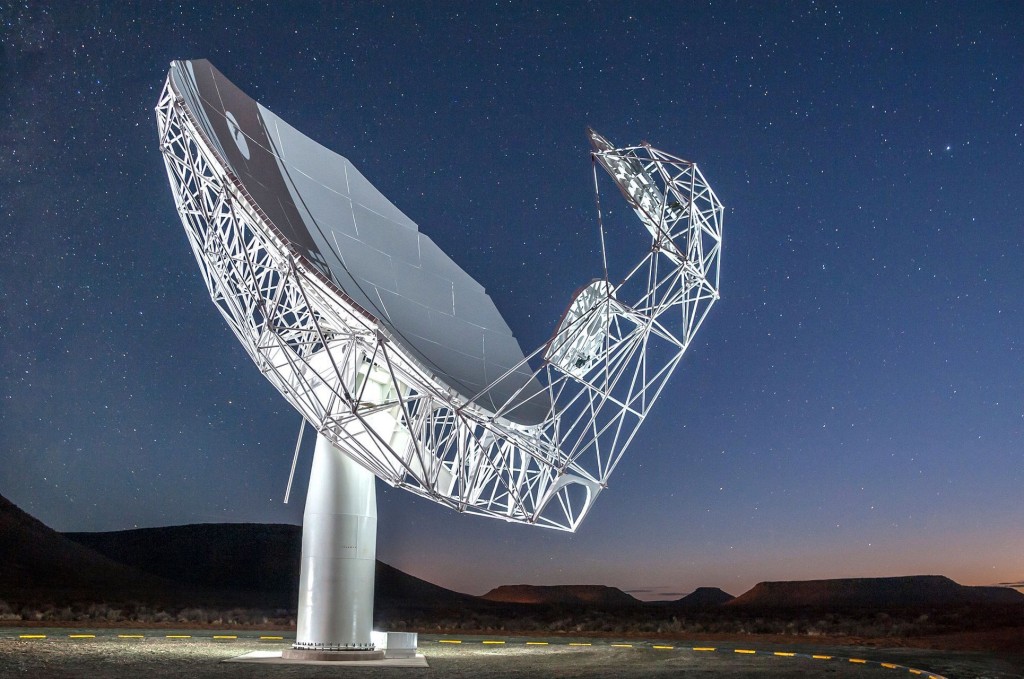
The confirmation that changes the timeline of active galactic nuclei📷 Published: Apr 14, 2026 at 10:29 UTC
The confirmation that changes the timeline of active galactic nuclei
The discovery arrives as MeerKAT nears the end of its standalone operations before integrating into the Square Kilometre Array (SKA), a next-generation observatory designed to map the radio sky with unprecedented fidelity. This TDRG detection serves as both a validation of MeerKAT’s capabilities and a preview of what SKA might uncover: if three-lobed systems are this rare with current instruments, SKA’s sensitivity could reveal dozens more, testing whether these are true anomalies or simply undercounted.
Yet the science here isn’t about quantity but mechanism. The leading hypothesis—advanced in the study’s preprint—posits that the galaxy’s central black hole has undergone multiple phases of jet ignition, each time carving new lobes through the intergalactic medium. Alternately, the lobes could trace a single, precessing jet—like a wobbling garden sprinkler—though no known black hole dynamics fully account for such precision over billions of years.
The real bottleneck may not be the telescope’s resolution but the lack of a unified model for recurrent jet activity. As co-author Dr. Leith Godfrey of the Rhodes University Centre for Radio Astronomy Techniques & Technologies noted in a statement, 'Either we’re missing a key piece of black hole physics, or these galaxies are far more dynamic than we assumed.' With SKA’s first light approaching, the clock is ticking to refine those assumptions.