Baltic Whale and Fehmarn Delays Push Scandlines Toward Faster Ferry Electrification
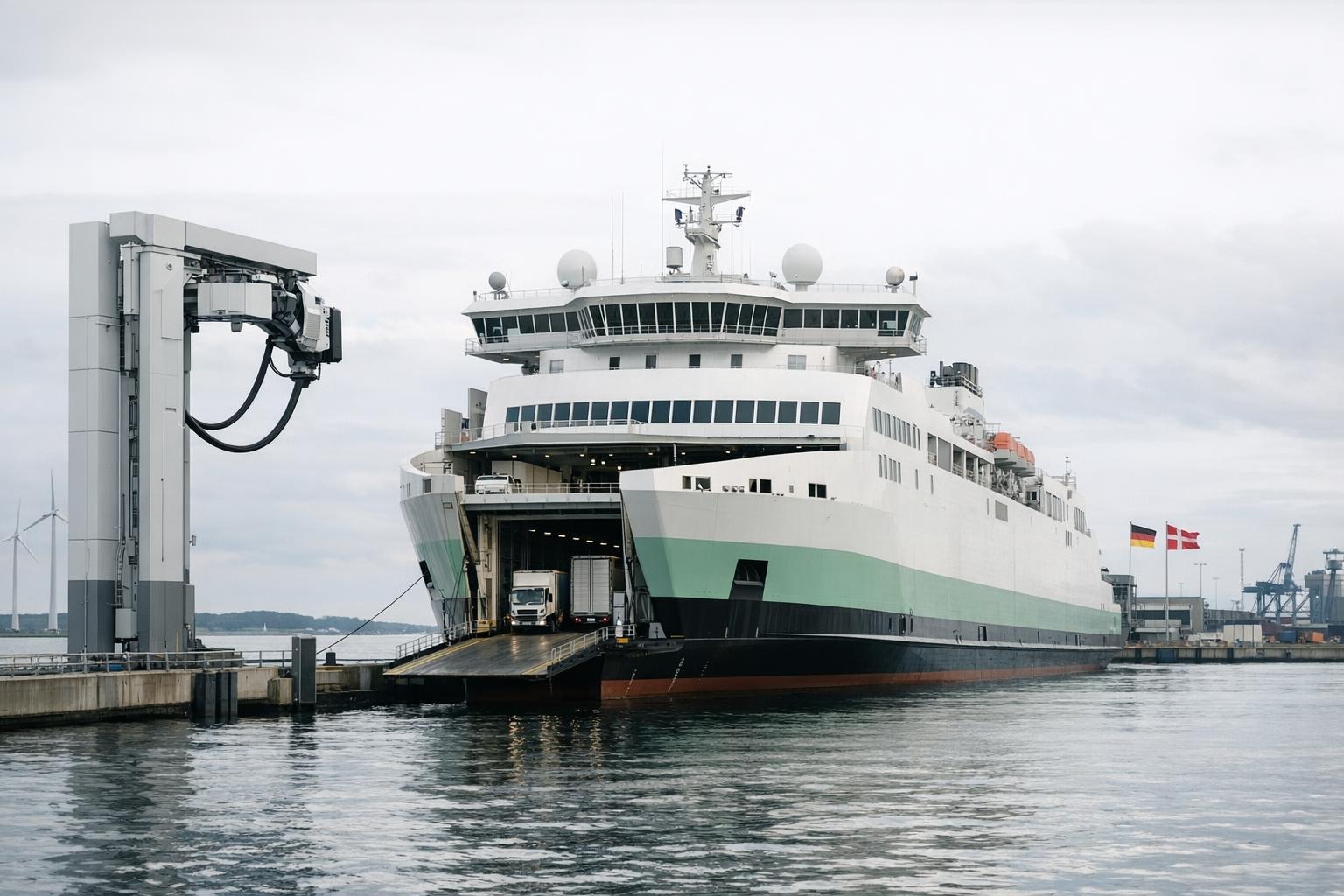
Baltic Whale places battery-electric ferry operations at the center of a longer-than-expected wait for the Fehmarn fixed link.📷 Published: Apr 24, 2026 at 16:11 UTC
- ★Baltic Whale arrived after 18 months of development and testing, combining a 10 MWh battery system with automated port charging.
- ★Scandlines is treating electrification not as a distant transition goal but as an immediate response to Fehmarn delays and the continued relevance of existing routes.
- ★The story matters beyond one operator because short-sea decarbonization depends on charging infrastructure, turnaround discipline, and fleet economics.
According to CleanTechnica’s report, Scandlines formally launched Baltic Whale on March 10 after 18 months of development and testing. At the center of the project is a 10 MWh battery system paired with automated port charging, placing the vessel in a still narrow but increasingly important class of ships designed for fully electric work on short-sea routes.
The published technical description emphasizes zero direct operational emissions, while the company also says the vessel brings roughly 27% more freight capacity than conventional diesel ferries on the same corridor. That is where the story becomes more than a product announcement.
Baltic Whale is not being presented as a concept for some distant market; it is being introduced as a ship for current operating conditions. In practical terms, that means electrification has to work inside a strict cycle of arrival, unloading, loading, charging, and departure.
Battery size, charging speed, and terminal reliability therefore matter more than the symbolism of a “green” vessel. If a ferry like this can hold schedule on a demanding short crossing, electrification moves out of the pilot phase and into the realm of actual freight logistics.
The timing gives the launch additional significance. The Fehmarn fixed link, long expected to reshape traffic flows between Denmark and Germany, continues to face delays.
The published article frames that slowdown as part of an opening pushed to 2031 or later. For ferry operators, that is not a minor planning detail.
It changes the investment horizon. Existing services are likely to remain relevant for longer, which makes a cleaner and more efficient vessel look less like a temporary bridge to the tunnel era and more like a durable commercial decision.
A new battery ferry shows how short Baltic routes are becoming a long-term test bed for maritime decarbonization
That is why Scandlines’ move matters beyond a single company. European transport policy often speaks in broad terms about maritime decarbonization, but short-sea routes have a specific advantage: predictable sailing profiles, repeatable duty cycles, and charging opportunities tied to known terminals.
Those characteristics make them one of the most plausible environments for battery propulsion, provided the port-side power system can keep pace with operations. Baltic Whale therefore functions as a test of something larger than one ship.
It suggests maritime innovation does not always have to wait for a full solution to deep-sea shipping before it becomes commercially meaningful. At the same time, the project should not be read as proof that ferry electrification is easy or universally transferable.
Battery mass, capital cost, grid connection demands, and operational reserve margins remain real constraints. That is precisely why the vessel is interesting.
It shows part of the sector moving beyond distant promises, regulatory rhetoric, and long-range decarbonization targets toward fleet decisions grounded in today’s traffic patterns and energy realities. If that approach holds up in regular service, the result will be more important than lower emissions on one route.
It could change how European operators view short maritime corridors: not as legacy links waiting to be replaced by major fixed infrastructure, but as places where electric propulsion can be tested, refined, and scaled under commercial conditions. For primary project and technical updates, readers should also watch the official Scandlines and Fehmarn/Femern channels directly.