JWST’s redshift record rewrites early-universe timelines
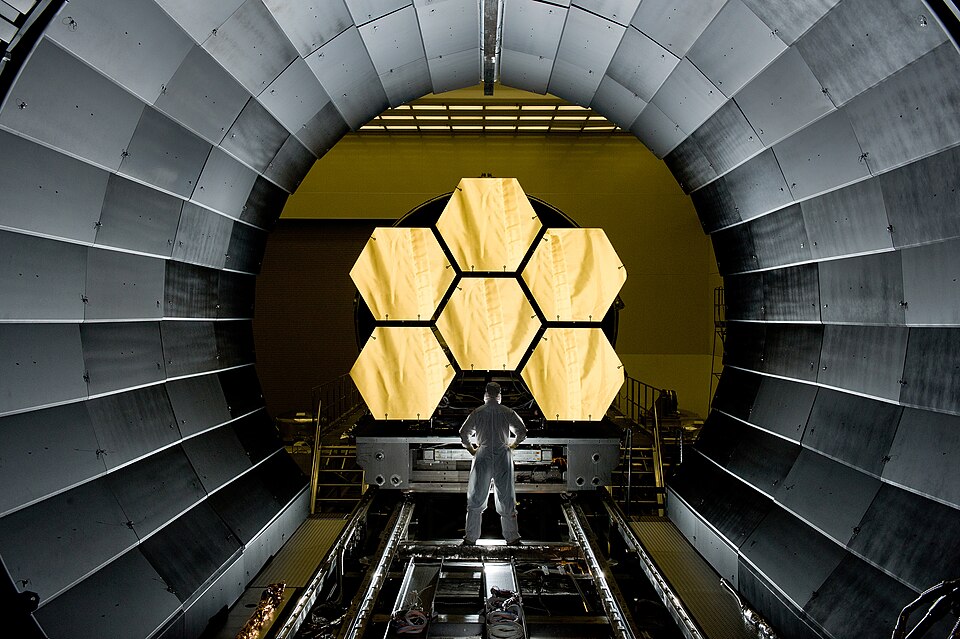
JWST’s redshift record rewrites early-universe timelines📷 Published: Mar 25, 2026 at 21:17 UTC
- ★Redshift 11.45 galaxy breaks distance records for red objects
- ★EGS-z11-R0 challenges models of early star formation
- ★Pre-print discovery awaits spectroscopic confirmation
When the James Webb Space Telescope (JWST) peered into the EGS field last year, it wasn’t just collecting light—it was testing the limits of how far back in time we can confirm the universe’s structure. The detection of EGS-z11-R0, a red galaxy at a spectroscopically measured redshift of 11.45, doesn’t just set a record. It forces a recalibration of when and how the first massive, dust-enshrouded galaxies could have formed.
The numbers are precise: 11.45 places this galaxy at roughly 13.2 billion years ago, when the universe was only 3% of its current age. Unlike earlier candidates flagged by Hubble’s extreme deep fields, EGS-z11-R0’s red hue isn’t an artifact of observational noise—it’s the signature of dust-obscured star formation, detected in JWST’s NIRCam and MIRI bands. The arXiv pre-print (published March 18) emphasizes this isn’t a candidate but a confirmed detection, though spectroscopic follow-up remains pending.
This isn’t about breaking a record for its own sake. Red galaxies at such distances were theoretically possible, but their scarcity in early surveys suggested they might be rare—or that our models of reionization-era dust were incomplete. EGS-z11-R0’s existence implies either that dust production in the early universe was far more efficient than assumed, or that our instruments are finally sensitive enough to catch what was always there.
The measurement that shifts the boundary of confirmed cosmic dawn📷 Published: Mar 25, 2026 at 21:17 UTC
The measurement that shifts the boundary of confirmed cosmic dawn
The discovery arrives at a critical juncture for JWST’s Cycle 2 observations. Programs like COSMOS-Web and JADES are explicitly hunting for such objects, but EGS-z11-R0 wasn’t part of a targeted search—it emerged from a broader survey. That randomness underscores a shift: JWST isn’t just validating predictions; it’s revealing populations we lacked the resolution to see.
What’s missing? Spectroscopic confirmation from NIRSpec would lock in the redshift and chemical composition, distinguishing between a dust-rich galaxy and one with an unusually old stellar population. Until then, the Phys.org report and pre-print authors urge caution: this is a photometric redshift, not yet ironclad. The Space Telescope Science Institute has prioritized follow-up, but scheduling conflicts mean answers may take months.
The real signal here isn’t just the distance—it’s the implication that the early universe may have been dustier and more structured than our cleanest simulations suggest. If EGS-z11-R0’s peers are common, they could redefine the timeline of when galaxies transitioned from transparent to opaque, altering our understanding of how quickly heavy elements spread after the Big Bang.