Galactic Archaeology Extends Beyond the Milky Way
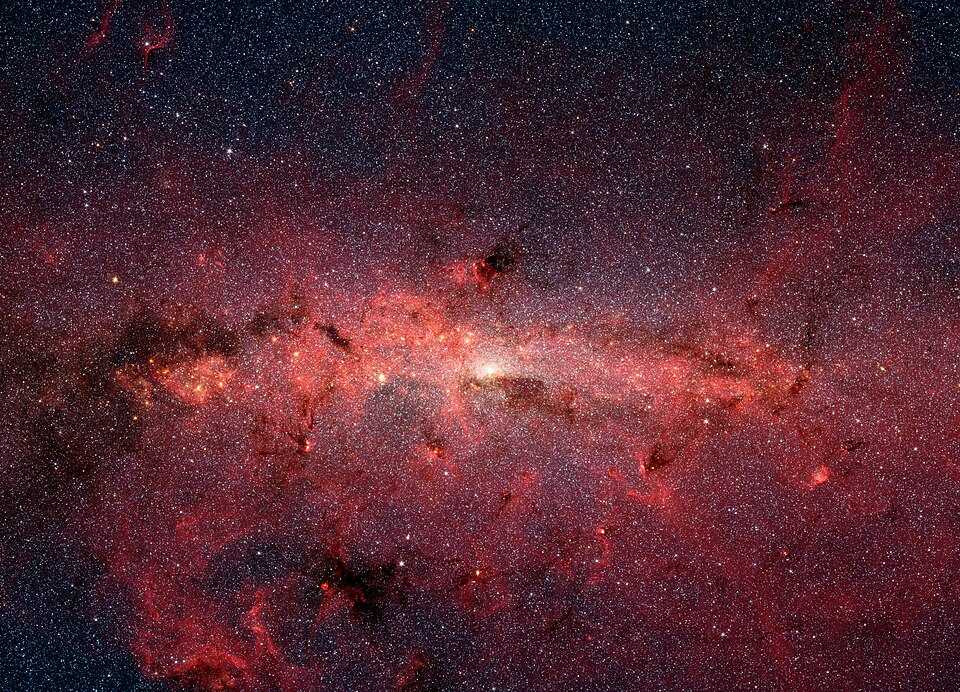
Galactic Archaeology Extends Beyond the Milky Way📷 Published: Mar 26, 2026 at 09:12 UTC
- ★First extragalactic application of stellar forensics
- ★Illustris TNG simulations enabled distant galaxy analysis
- ★New framework for studying galaxy evolution
For decades, galactic archaeology has allowed astronomers to read chemical fingerprints of stars within our own Milky Way, reconstructing the galaxy's formation history like investigators piecing together an ancient crime scene. Now, a team led by the Center for Astrophysics | Harvard & Smithsonian has achieved something previously thought impossible: applying those same forensic techniques to a galaxy far beyond our own. This marks the first successful demonstration of what researchers call "extragalactic archaeology."
The significance lies in the method itself. Traditional galactic archaeology relies on resolving individual stars and measuring their chemical compositions — a feat achievable only within our immediate cosmic neighborhood. Distant galaxies appear as smudges, their individual stars indistinguishable. The research team, whose work was covered by Universe Today, circumvented this limitation by combining observational data with the Illustris TNG simulations, creating a framework that can infer chemical histories from integrated light rather than individual stellar spectra.
The technique that extends stellar forensics beyond our galaxy📷 Published: Mar 26, 2026 at 09:12 UTC
The technique that extends stellar forensics beyond our galaxy
The Illustris TNG simulations represent some of the most sophisticated cosmological models available, generating virtual universes that evolve according to our understanding of physics. By matching observed galaxy properties against these simulations, researchers can work backward to reconstruct formation histories that would otherwise remain invisible. According to available information, this approach could fundamentally alter how astronomers study galaxy evolution across cosmic time.
What makes this development particularly significant is its scalability. The method doesn't require resolving individual stars, meaning it can be applied to galaxies at far greater distances than traditional archaeology permits. If confirmed across additional targets, extragalactic archaeology could provide statistical insights into how galaxies grow, merge, and evolve — not just for one specimen like the Milky Way, but for populations spanning billions of light-years. There's speculation that this could eventually enable large-scale surveys of galactic formation histories. The real signal here is that our tools for reading cosmic history just expanded dramatically beyond our own galactic neighborhood.