Chaos Eclipses Physics in Neutron Star Simulations📷 Published: Mar 16, 2026 at 12:00 UTC
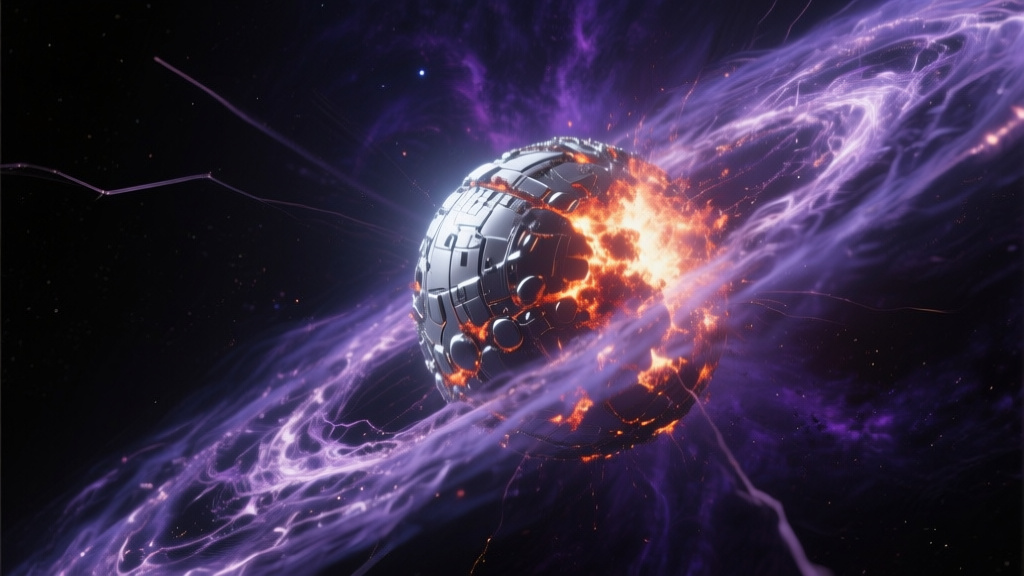
When the most violent mergers in the universe occur, chaos does not merely accompany the event; it actively suppresses the very laws of physics we rely on to understand them. New supercomputer simulations reveal that during neutron star collisions, magnetic fields become so turbulent that they trap high-energy gamma-ray photons, preventing them from escaping the immediate aftermath. This finding shifts our understanding from viewing these events as simple laboratories for nuclear physics to recognizing them as domains where disorder dictates observable reality. For astrophysicists, this means previous models assuming clean photon emission may need significant recalibration to account for this entrapment. The significance lies not in the spectacle of the crash, but in the realization that our standard physical models break down under such extreme magnetic stress. You can read the initial report from Universe Today regarding these extraordinary events.
Why supercomputer models now show disorder overriding fundamental laws📷 Published: Mar 16, 2026 at 12:00 UTC
Why supercomputer models now show disorder overriding fundamental laws
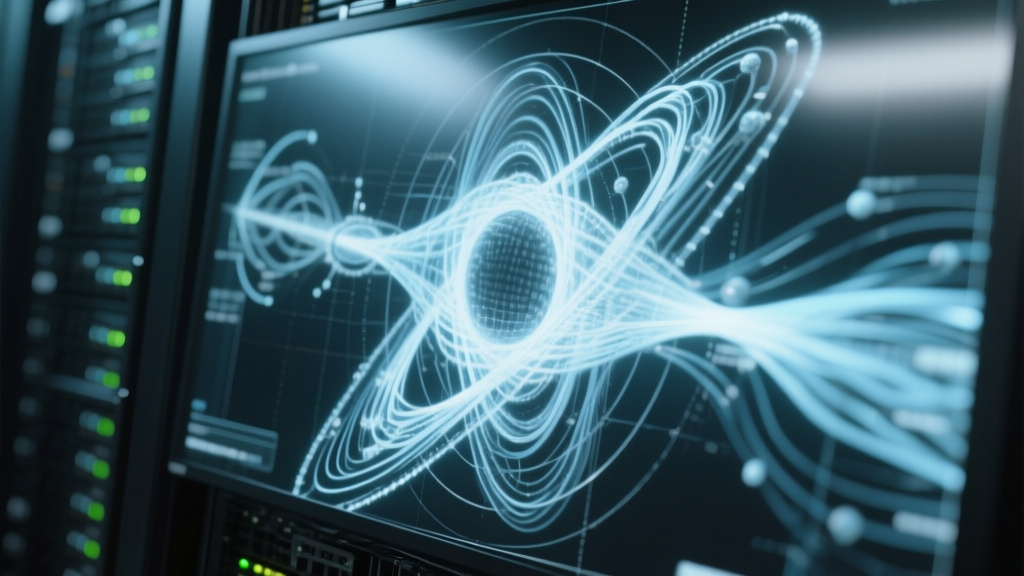
The simulations indicate that the magnetic turbulence generates a chaotic environment where photon paths are randomized rather than directed. This suggests that what we observe from Earth might only be a fraction of the actual energy released, as much of it remains locked within the merger's core. Researchers are now cross-referencing these computational results with historical data from gamma-ray burst detectors to see if this 'trapping' effect explains certain anomalies in light curves. While the community is responding with cautious optimism, early signals suggest this is a computational artifact that mirrors physical reality, not just a modeling error. Further peer review is required before this becomes a confirmed constraint on high-energy astrophysics, but the implications for how we model the early universe are profound. Detailed analysis of the magnetic topology is available via simulations discussed here.