Drones as cell towers are clever, but the network still has to fly
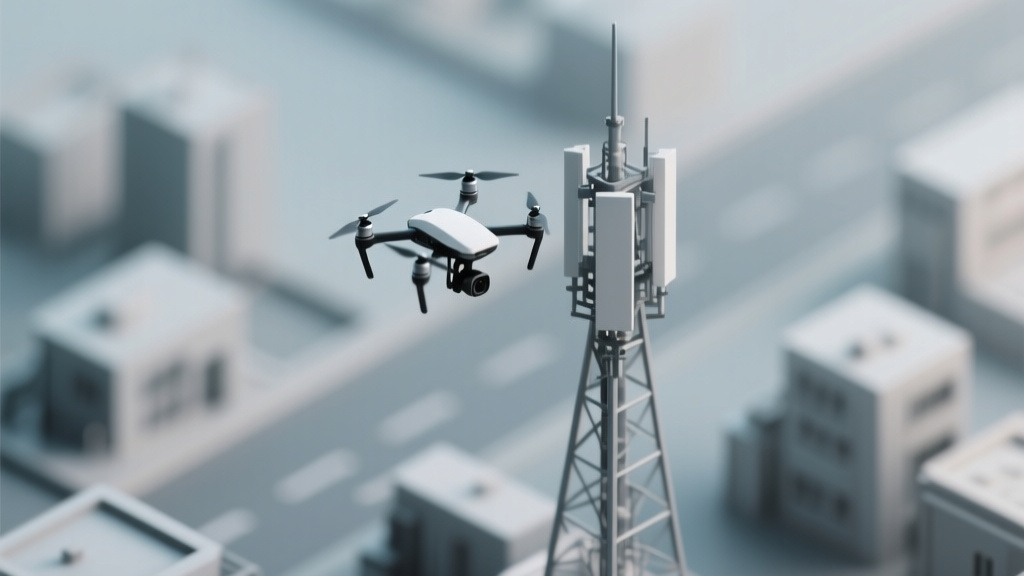
A temporary airborne relay drone above a dark city skyline.📷 © Tech&Space
- ★Drones can cover network gaps
- ★Flight and regulation are the bottlenecks
- ★Temporary infrastructure has real limits

The idea is simple: if a network is overloaded or fails, drones could act as temporary airborne relays. On paper that is elegant because it avoids building new ground infrastructure and can be deployed quickly where signal is needed most. TechRadar and IEEE Spectrum both point to the same truth: communications problems are usually logistics problems too.
In practice, that turns drones into part of the network architecture rather than a flying gadget. Telecom operators have spent years looking for ways to fill coverage holes and restore service after disasters, and temporary relay concepts are aimed squarely at that problem. But the hard part is obvious: the drone has to stay aloft long enough, maintain a stable link to the base network, and avoid becoming a new point of failure.
In other words, this is not “a drone with Wi-Fi” but a small network system with very specific constraints. The more users and interference you add, the more the elegant concept turns into an operational compromise.

A relay drone with antennas and a battery pack.📷 © Tech&Space
The network works only if the drone stays up
Battery life is the first wall. The longer the drone works, the less useful it becomes for continuous service. That is why these systems usually depend on short missions, charging stations, or multiple units swapping in and out. NASA missions and airborne projects keep showing the same lesson: power budgets decide what survives the demo.
Regulation is the second wall. Even if the technology works, the question is where, when, and under what conditions it can legally fly over people. In dense urban areas that means permits, safety zones, and clear procedures, all of which usually move slower than the technology itself.
That is why this concept is interesting for emergency response and temporary events, but not yet proof that your phone will one day get a signal from a drone the way it does from a normal base station.