Glydways raised $170 million for AV corridors, but the economics still need a real-world test
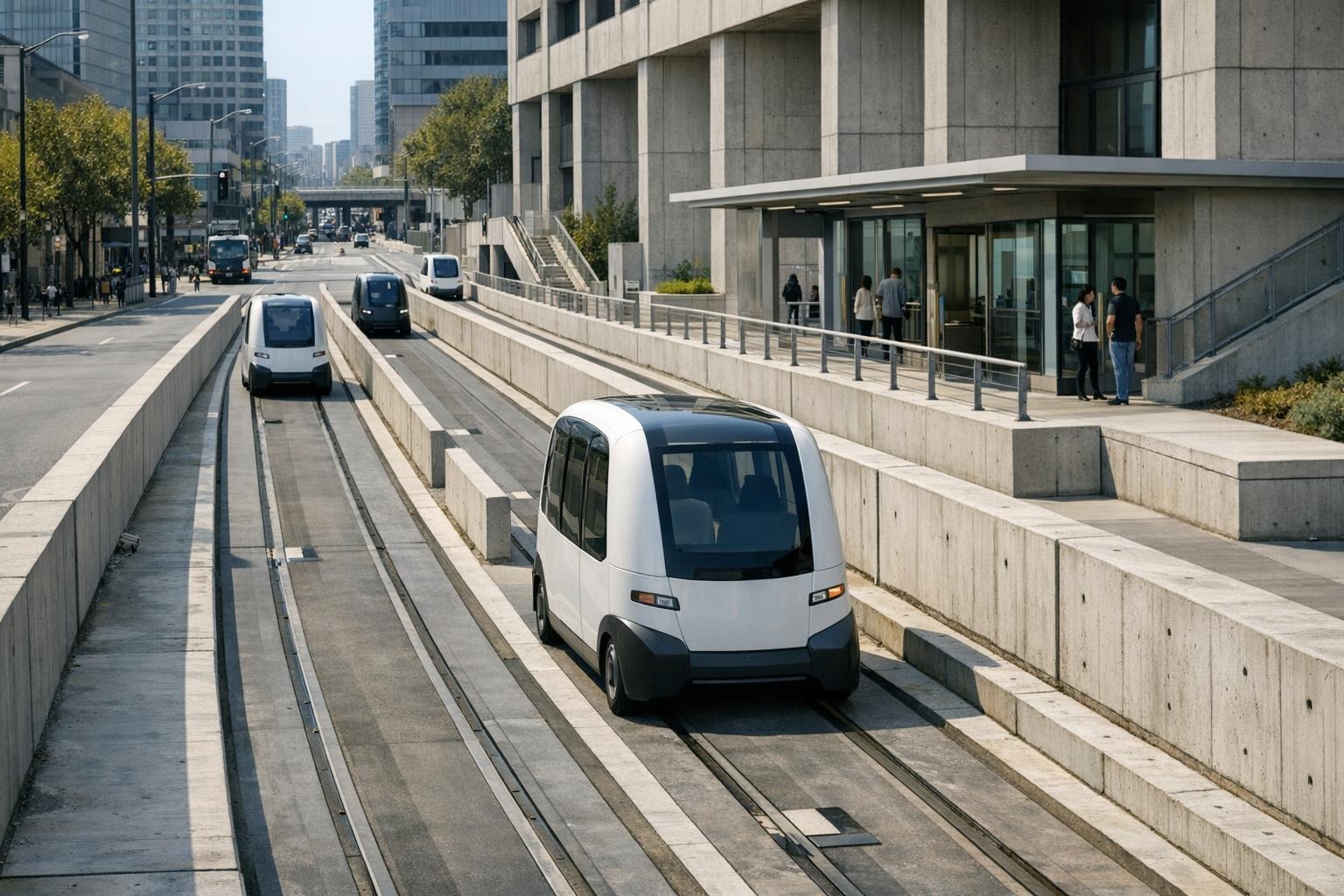
Glydwaysov model počinje kontroliranim koridorom: tehnički urednije okruženje za autonomiju, ali i skuplji infrastrukturni paket.📷 Published: Apr 23, 2026 at 10:42 UTC
- ★Glydways is arguing that autonomous vehicles perform more reliably in a purpose-built corridor than in mixed traffic.
- ★That approach reduces part of the technical risk, but it introduces harder infrastructure, regulatory, and political constraints.
- ★The central question is no longer just whether the vehicle can drive, but whether the full system can justify its cost against existing transit options.

The Robot Report reports that Glydways has raised $170 million to scale its AV technology. The amount matters, but the operating thesis matters more. The company is not trying to prove that autonomous vehicles can immediately handle the full disorder of public roads. It is trying to prove that, for some transport use cases, it is more rational to constrain the environment first and then deploy autonomy inside that controlled envelope. That is a more serious technical posture than broad claims about autonomy working everywhere. Robotics has long followed the same rule: the more predictable the environment, the easier it is to make a system stable, repeatable, and safe enough for real operations. If vehicles run in a purpose-built corridor, there are fewer unpredictable interactions, fewer edge cases, and less dependence on software flawlessly interpreting the full mess of open streets. But that cleaner technical picture immediately creates a harder deployment problem. Once an autonomous system needs its own corridor, the discussion shifts away from sensors, perception, and software toward routing, civil works, permits, regulation, and maintenance. In practical terms, part of the risk moves from computer vision to infrastructure execution. That can be a rational trade, but it means a polished vehicle demo is no longer the main hurdle. The company has to show that someone is willing and able to build the surrounding system that makes the concept viable. That is why Glydways is no longer competing only with other AV strategies. It is also competing with transport modes that are less futuristic but far easier for cities and campuses to understand operationally and politically. If the concept requires dedicated right-of-way, buyers will compare it with buses, trams, BRT, and other shuttle formats, not just with other autonomous vehicle stacks.
The company is not trying to solve public-road chaos with software alone; it is trying to build a controlled environment where autonomous transit faces fewer variables and far more infrastructure burden
That is where the business model faces its real test. Dedicated infrastructure can reduce part of the safety and operational risk, but it does not remove the economics question. Who pays for the route, who maintains the system, how failures and stoppages are handled, what real passenger throughput looks like, and whether the service remains competitive over years of operation — those are the questions that determine whether the model survives beyond presentations. That does not mean Glydways has chosen the wrong path. On the contrary, narrowing the problem is often the most mature move a robotics company can make. Instead of promising general autonomy in a fully open environment, Glydways is selecting a space where performance can be defined more tightly and supervised more cleanly. Technically, that is a disciplined framework. Commercially, it is also a framework with a much higher burden of proof. So the $170 million should be read as capital to test the thesis, not as confirmation that the thesis has already won. The company now has to demonstrate more than a functional vehicle and a convincing corridor rendering. It has to show that an infrastructure-first model delivers enough reliability, utilization, and operating clarity to justify the added construction and political burden. The core of the story is therefore not futuristic but very practical. If a purpose-built AV corridor cannot clearly outperform simpler alternatives on cost, maintenance, and everyday usefulness, then $170 million will not look like the start of a new transport category. It will look like an expensive reminder that a controlled demo is much easier to achieve than a durable transport deployment.