Bartlett Lake’s hidden desktop potential—if Intel lets it happen
Bartlett Lake’s hidden desktop potential—if Intel lets it happen📷 Published: Apr 7, 2026 at 24:35 UTC
- ★Raptor Lake spoofing unlocks OEM-only CPU on Z790
- ★AI-centric silicon stuck in limbo for consumers
- ★Modders expose Intel’s platform flexibility—unofficially
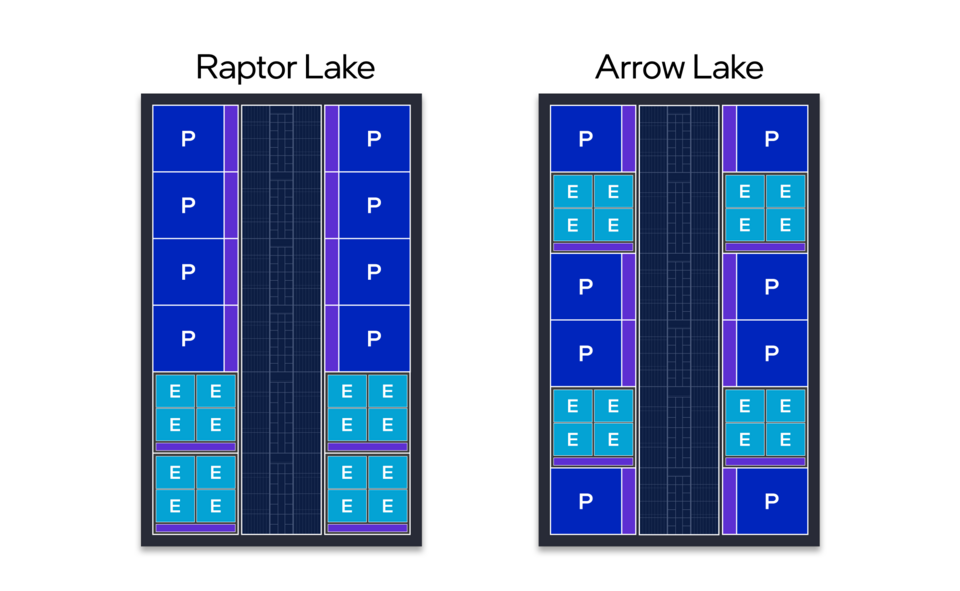
Intel’s Bartlett Lake Core i9-273PQE wasn’t meant for your desktop. Officially, it’s an OEM-exclusive part, buried in prebuilt workstations and AI-focused systems where its all-performance-core design shines. But a modder on Overclock.net just proved the silicon’s latent compatibility: with hand-rolled microcode and a spoofed Raptor Lake identity, the chip booted Windows 11 on a standard Asus Z790 board—no soldering, no adapter hacks, just BIOS trickery.
The mod isn’t just a flex. It exposes how Intel’s LGA1700 platform, now two generations old, still has untapped headroom. Bartlett Lake’s architecture is close enough to Raptor Lake that a few patches bridge the gap—yet Intel’s segmentation keeps it out of DIY hands. That’s a familiar tension: enthusiasts have long pried open OEM-only parts, but this case highlights how arbitrary the barriers can be when the hardware itself cooperates.
For now, the mod remains a proof-of-concept with caveats. Stability under load isn’t documented, and the patches aren’t public. But the bigger question isn’t whether it works—it’s why Intel hasn’t offered a desktop SKU when the demand (and compatibility) clearly exists.
The real-world gap between what Intel’s chips can do and what they’re allowed to do📷 Published: Apr 7, 2026 at 24:35 UTC
The real-world gap between what Intel’s chips *can* do and what they’re *allowed* to do
The modder’s success throws a spotlight on Intel’s AI PC strategy, which leans heavily on Bartlett Lake’s neural processing muscle. Yet by restricting it to OEMs, Intel cedes ground to AMD’s Ryzen AI push, where desktop users can actually buy the chips. That’s a missed opportunity: enthusiasts and small studios hungry for local AI workloads would jump at an all-P-core part, even if it meant sacrificing efficiency cores.
Then there’s the ecosystem ripple. Motherboard vendors like Asus could theoretically add Bartlett Lake support with a BIOS update—but they won’t without Intel’s blessing. That leaves modders filling the gap, a pattern we’ve seen with unsupported CPU upgrades before. The difference here? Bartlett Lake isn’t just a speed bump; it’s a fundamentally different workload target, one Intel seems content to gatekeep.
The real kicker? This mod didn’t require exotic hardware. A $200 Z790 board and off-the-shelf cooling handled it. That’s not a technical limitation—it’s a business decision. And for users who’ve watched Intel drip-feed 13th/14th-gen refreshes while sitting on Bartlett Lake, the message is clear: the next big thing might already be in your socket. If only you were allowed to use it.