M4 MacBook Air’s $300 discount isn’t just a deal—it’s a strategy
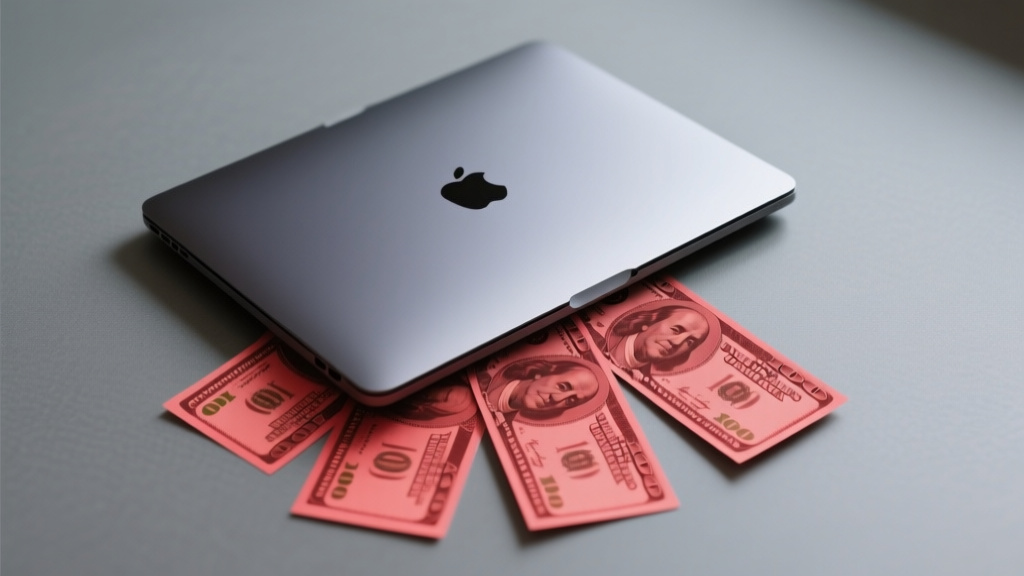
A single 15-inch M4 MacBook Air in midnight finish, closed, viewed from directly above in a flat geometric bird's-eye composition, surrounded by📷 Photo by Tech&Space
- ★24GB RAM M4 Air hits $1,299—lowest ever at Amazon
- ★M5 announcement triggers rare Apple price war
- ★High-spec users gain, but ecosystem lock-in tightens
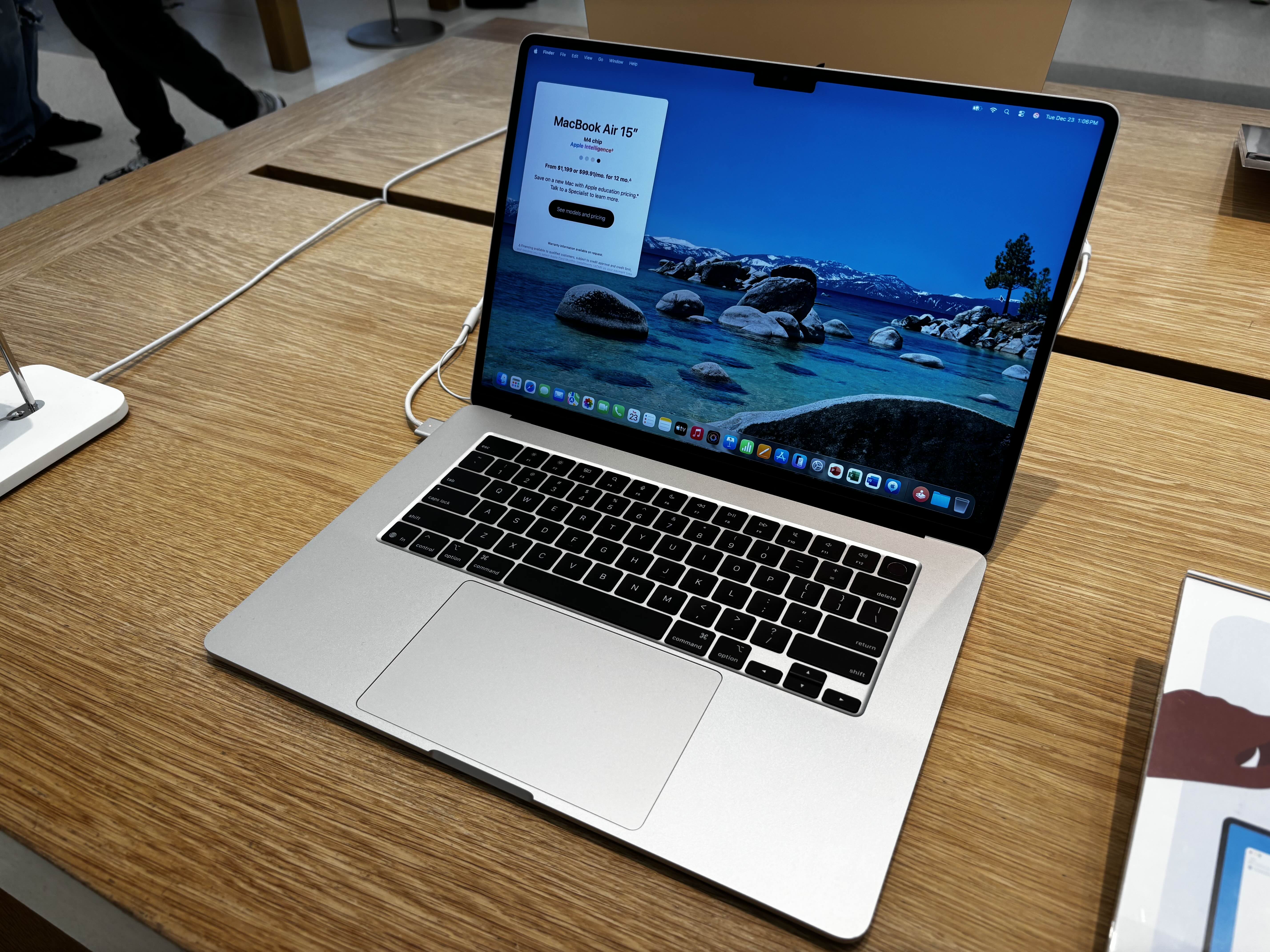
Apple’s 15-inch MacBook Air with 24GB of RAM—already a niche configuration—just dropped to $1,299 at Amazon, its lowest price ever. That’s $300 off the standard $1,599 tag, a discount so steep it suggests Apple’s clearing inventory ahead of the M5 transition. The timing isn’t coincidental: high-spec RAM models rarely see price cuts this aggressive, and the M5’s arrival makes the M4’s 24GB option look like a fire-sale bargain for power users who need headroom but don’t chase bleeding-edge silicon.
The discount exposes a tension in Apple’s upgrade cycle. For years, the company has conditioned users to accept incremental annual bumps—new chips, minor efficiency gains—as justification for full-price purchases. But a $300 cut on a configuration that Tom’s Hardware calls Apple’s ‘highest-spec RAM’ for this line undermines that narrative. It’s not just about moving old stock; it’s a rare admission that even Apple’s most loyal customers have limits.
This isn’t a win for bargain hunters alone. Developers running memory-heavy workloads (think local LLMs, 4K video editing, or Xcode with multiple simulators) now face a real choice: save $300 on an M4 with ample RAM, or gamble on the M5’s unproven gains. The calculus changes when the premium for ‘new’ isn’t just money—it’s measurable workflow disruption.
M4 MacBook Air’s $300 discount isn’t just a deal—it’s a strategy📷 Photo by Tech&Space
The discount that reveals Apple’s upgrade calculus
The broader market context makes this discount sharper. Competitors like Dell’s XPS 16 and Lenovo’s Yoga 9i have been chipping away at Apple’s dominance in the premium thin-and-light segment, offering comparable specs with more ports and upgradeability. A $300 price cut on a sealed, non-upgradeable MacBook Air isn’t just a sale—it’s a defensive move. Apple’s betting that ecosystem lock-in (iMessage, AirDrop, Final Cut Pro) outweighs the allure of modular competitors.
Yet the user reality complicates the pitch. Benchmarks show the M4’s 24GB configuration handles memory pressure gracefully, but real-world gains over 16GB are marginal for most tasks. The discount turns this into a psychological play: ‘Why not future-proof?’ But future-proofing in Apple’s wall garden means accepting that RAM upgrades are impossible and resale values plummet post-announcement. The $300 ‘savings’ might just be the cost of delaying the inevitable.
The ecosystem effects ripple further. Third-party accessory makers and repair shops—already squeezed by Apple’s self-service repair restrictions—now face a glut of M4 devices entering the market at lower price points. Meanwhile, enterprise buyers who standardize on MacBooks may pause upgrades, waiting to see if M5 delivers meaningful efficiency jumps or just another 5% battery life bump.