Artemis 2 Flyby Marks Precision in Lunar Return
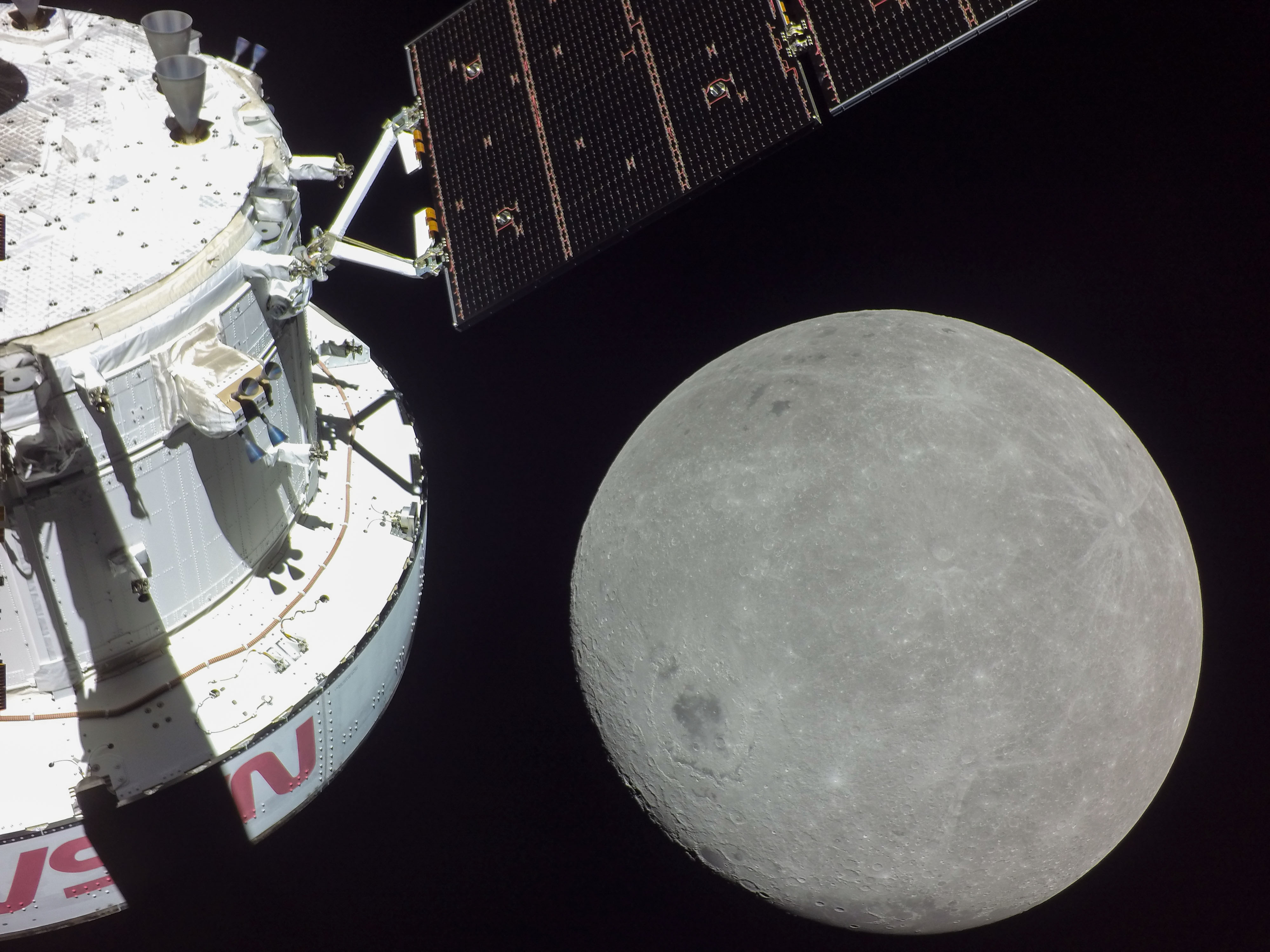
Artemis 2 Flyby Marks Precision in Lunar Return📷 Published: Apr 9, 2026 at 11:16 UTC
- ★First crewed Moon orbit since Apollo
- ★Orbital data refines deep-space navigation
- ★High-res imagery aids future landing sites
Four astronauts aboard Artemis 2 became the first humans to orbit the Moon since 1972, but the mission’s deeper value lies in the cold, hard data it returned. Every trajectory adjustment and altitude reading during the 6.5-day circumlunar loop was tracked in real time by NASA’s Deep Space Network, refining models for future crewed landings. Unlike Apollo’s rougher analog systems, Artemis 2’s optical star trackers and inertial measurement units delivered centimeter-level precision—critical for the narrow corridors of future lunar south pole missions.
The crew’s 7,400 km closest approach to the lunar surface wasn’t just for dramatic imagery. It allowed ground teams to calibrate terrain-relative navigation for Orion’s upcoming autonomous descent phases. Early analysis of the high-resolution photographs—released in a staggered cadence to manage data bandwidth—has already identified potential landing zones near Shackleton Crater with far greater clarity than orbital reconnaissance from uncrewed missions like Lunar Reconnaissance Orbiter.

The real signal: engineering milestones over spectacle📷 Published: Apr 9, 2026 at 11:16 UTC
The real signal: engineering milestones over spectacle
Beyond navigation, Artemis 2 tested the Orion capsule’s radiation shielding during extended periods outside Earth’s protective magnetosphere. Dosimeters inside the spacecraft recorded cumulative exposure values within 5% of pre-flight simulations, confirming that current shielding designs are sufficient for six-week lunar sorties. This validation removes one of the last major technical barriers for Artemis 3’s surface landing, currently slated for 2026.
The mission also provided a rare live stress test for NASA’s new flight control procedures. Unlike the rigid, pre-scripted timelines of Apollo, Artemis 2’s flight plan included contingency windows for real-time decision-making—an approach that will be essential for the unpredictable conditions of Mars missions. The post-flight debrief has already noted minor anomalies in the life-support system’s CO₂ scrubbers, which engineers are now simulating in ground-based mockups to prevent recurrence.