The Black Hole Desert Debate: A Gap in Stellar Evolution
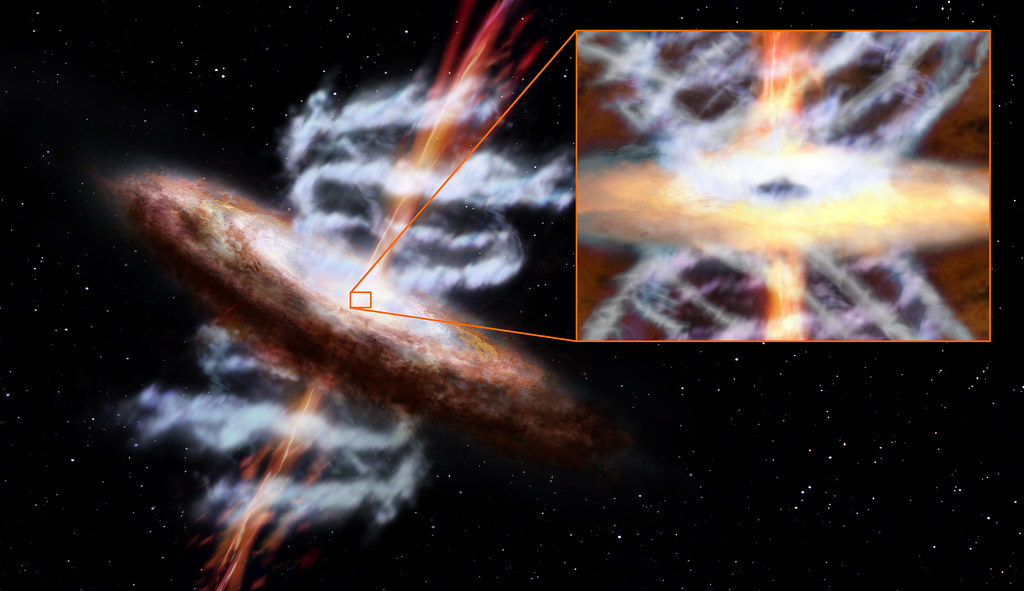
The Black Hole Desert Debate: A Gap in Stellar Evolution📷 Source: Web
- ★Disputed mass gap in stellar black holes
- ★Gravitational wave data fuels disagreement
- ★Models of stellar collapse under scrutiny
Astronomers are locked in a rare public disagreement over whether stars leave a conspicuous void in the black hole mass spectrum. The so-called black hole desert—a theorized gap between the heaviest neutron stars and the lightest black holes—has long been a prediction of stellar evolution models. Now, emerging data from gravitational wave observatories like LIGO and X-ray binaries monitored by NASA’s Chandra are forcing a reckoning: either the gap exists, or our understanding of how massive stars die is incomplete.
The debate hinges on two competing interpretations. Some researchers, including teams analyzing LIGO-Virgo-KAGRA detections, argue that the absence of black holes between ~2.5 and 5 solar masses is statistically significant—a confirmed feature of the cosmos. Others, pointing to outliers like the 2.6-solar-mass object in GW190814, counter that the desert may be an artifact of limited observations or selection bias.
This isn’t just academic quibbling. If the gap is real, it implies that supernovae and core collapse follow stricter rules than current simulations suggest. The stakes are highest for models predicting pair-instability supernovae, where massive stars theoretically explode entirely, leaving no remnant—just a desert where black holes shouldn’t form.
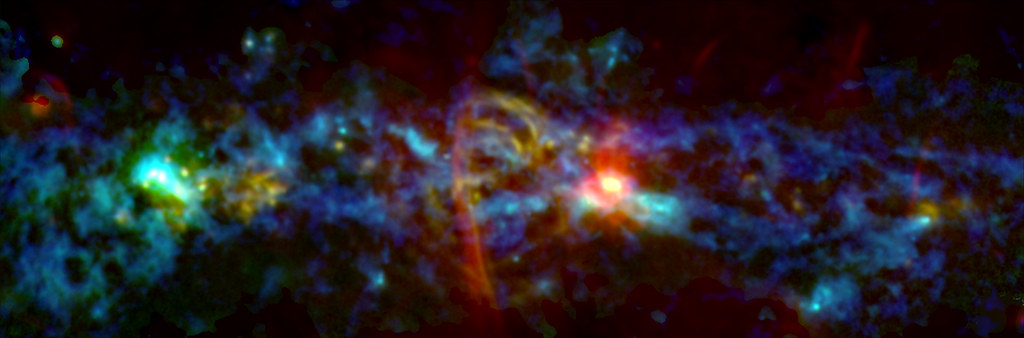
New observations challenge what we know about black hole formation—and what we don’t📷 Source: Web
New observations challenge what we know about black hole formation—and what we don’t
The tension mirrors a broader shift in astrophysics: as instruments grow more precise, long-held assumptions face harder tests. For decades, the desert was an elegant explanation for why we hadn’t found intermediate-mass black holes in certain ranges. But with JWST now probing early galaxies and next-gen gravitational wave detectors like LISA on the horizon, the lack of detections in this mass range may soon become a liability for theory—or a triumph of prediction.
What’s missing isn’t just data, but consensus on how to weigh it. A 2023 preprint from the Max Planck Institute for Gravitational Physics argued that current catalogs are too sparse to rule out rare desert-dwelling black holes. Meanwhile, stellar astrophysicists like Selma de Mink note that if the gap holds, it could point to undiscovered physics in the final moments of a star’s life—perhaps involving neutrino-driven winds or exotic phase transitions.
The resolution may hinge on third-generation gravitational wave observatories, slated for the 2030s. Until then, the desert remains a Rorschach test: either a blank space in nature’s design or a blind spot in our instruments.