NASA’s DART Mission Proves We Can Nudge an Asteroid’s Path
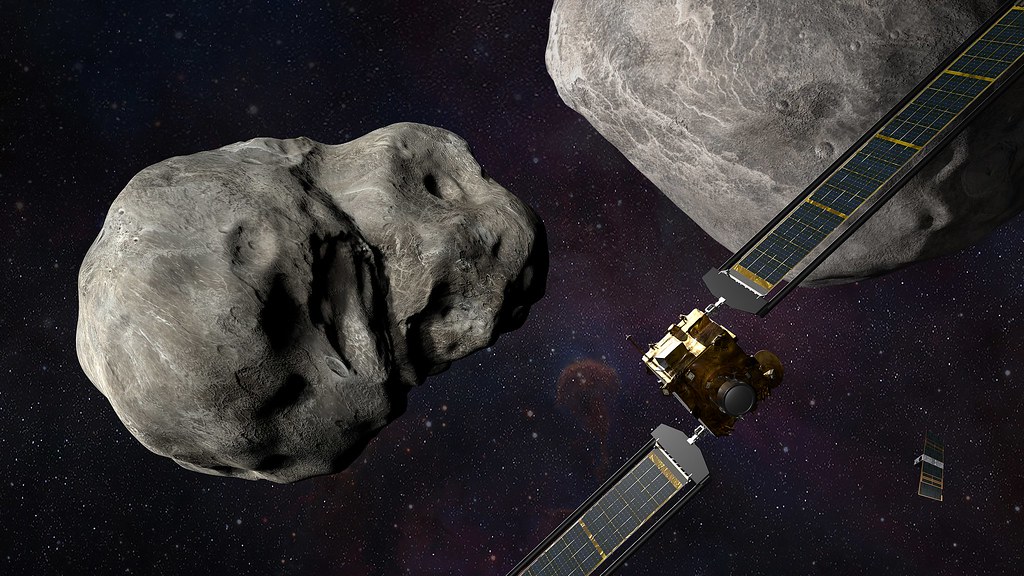
NASA’s DART Mission Proves We Can Nudge an Asteroid’s Path📷 Source: Web
- ★First confirmed human alteration of a celestial orbit
- ★33-minute orbital shift measured post-impact
- ★Planetary defense strategy now has empirical validation
In September 2022, NASA’s Double Asteroid Redirection Test (DART) spacecraft collided with Dimorphos, a 160-meter-wide asteroid moonlet orbiting the larger Didymos. The impact wasn’t just a kinetic demonstration—it was a deliberate experiment in planetary defense, designed to test whether humanity could measurably alter an asteroid’s trajectory. Now, a peer-reviewed study in Planetary Science Journal confirms what ground-based telescopes first suggested: the collision shortened Dimorphos’s orbital period around Didymos by 33 minutes, marking the first human-caused change to a celestial body’s heliocentric orbit ever recorded.
This wasn’t an accident of physics but the culmination of a decade-long mission architecture. DART’s target wasn’t chosen at random—Dimorphos’s binary system allowed for precise pre- and post-impact measurements of its orbit, using Earth-based observatories and the LICIACube cubesat deployed by the Italian Space Agency. The mission’s success hinged on a calculated trade-off: a high-velocity impact (6.1 km/s) to maximize momentum transfer, balanced against the need to avoid fragmenting the asteroid into unpredictable debris.
The study’s authors emphasize that while the orbital shift was modest, the implications are not. For the first time, scientists have empirical data on how a kinetic impactor performs against a real asteroid—not a simulation or a laboratory analog. This shifts planetary defense from theoretical modeling to an engineering discipline with measurable parameters: impact efficiency, ejecta dynamics, and long-term orbital stability.
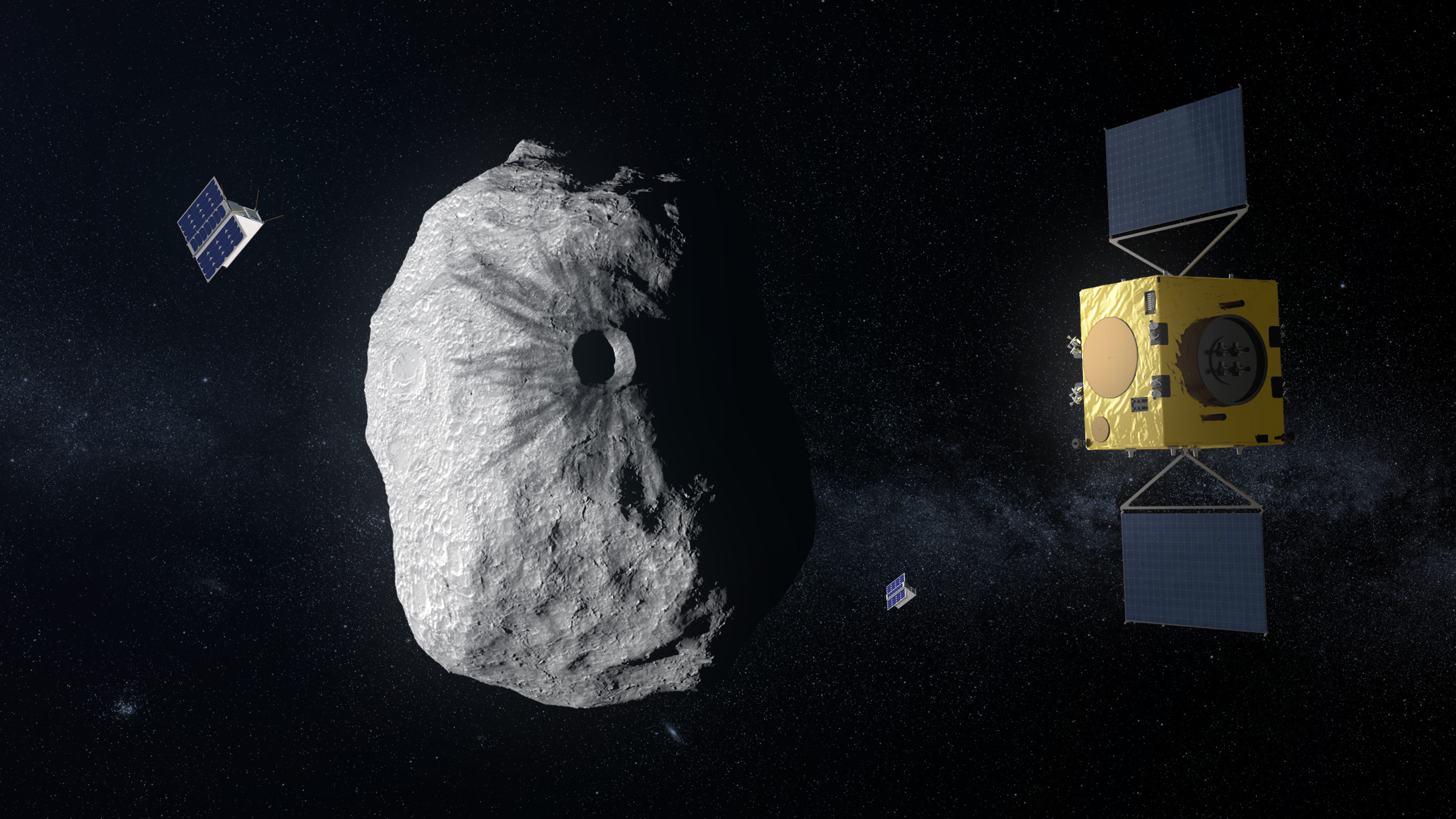
The confirmation that changes the timeline for asteroid deflection📷 Source: Web
The confirmation that changes the timeline for asteroid deflection
What makes this confirmation significant isn’t the spectacle of the collision—captured in dramatic Hubble images—but the precision of the follow-up. Early telescopic observations had estimated the orbital change at ~32 minutes; the new study refines that to 33 minutes, accounting for recoil from the ejecta plume, which contributed as much as 3.5 times the momentum of the spacecraft itself. This level of granularity matters because future missions may need to deflect asteroids with far less warning time, where every minute of orbital adjustment counts.
The findings also force a reassessment of how we model asteroid responses. Pre-impact simulations had predicted a range of outcomes, but none accounted for the complex interplay of surface composition, impact angle, and ejecta behavior observed in Dimorphos. The asteroid’s rubble-pile structure—loosely bound aggregates rather than solid rock—meant the impact excavated far more material than expected, amplifying the deflection effect. This isn’t just a footnote; it’s a critical variable for designing future interceptors, whether for ESA’s Hera mission (set to survey Dimorphos in 2026) or hypothetical emergency responses.
Yet the study leaves key questions unanswered. How does the deflection scale with asteroid size? Could the same technique work on a monolithic iron-nickel body, or would it require a nuclear option? And perhaps most pressingly: How do we translate a one-off experimental success into a reliable, repeatable capability? The DART team’s data is now the baseline—but the gap between a controlled test and an actual Earth-threatening scenario remains vast.