Uranus mission CASMIUS: The ice giant’s long-awaited return
A sleek silver metallic spacecraft orbiting closely over a deeply scarred, cold lunar grey moon surface, with a monumental, sideways-rotating Uranus📷 Photo by Tech&Space
- ★NASA’s Voyager 2 remains Uranus’ sole visitor after 1986 flyby
- ★CASMIUS targets ice giant’s sideways rotation and moon chemistry
- ★Mission fits into NASA’s 2023–2032 planetary science roadmap
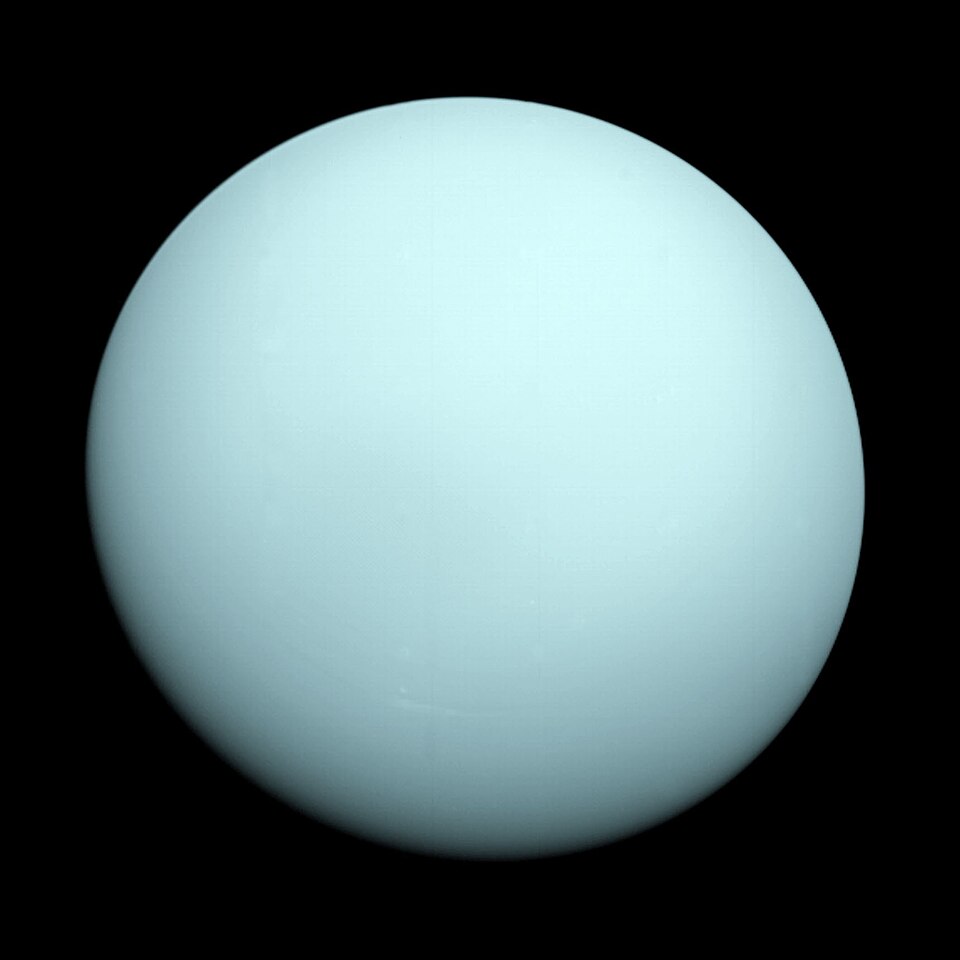
The last time humanity glimpsed Uranus up close, the Berlin Wall still stood. NASA’s Voyager 2 flew past the ice giant in January 1986, collecting six hours of data before vanishing into deep space. Since then, Uranus has remained a frozen enigma—its sideways rotation, dynamic rings, and chemically active moons studied only through telescopes like Hubble and JWST. That drought may end with CASMIUS, a proposed orbiter mission designed to probe the planet’s magnetic field, atmospheric composition, and the potential subsurface oceans of its major moons.
The scientific case for returning is overwhelming. Uranus and Neptune represent an entire class of ice giants absent from our solar system’s inner regions, yet they dominate exoplanet catalogs. Their extreme axial tilts—Uranus rotates at 98 degrees—suggest violent formation histories, while their moons (like Miranda, with its fractured cliffs) hint at geological activity despite frigid temperatures. CASMIUS would be the first mission to orbit Uranus, not just zip past it.
This isn’t speculative planning. The 2023 Planetary Science Decadal Survey ranked a Uranus orbiter and probe as NASA’s highest-priority large mission, citing its potential to ‘transform our knowledge of ice giants.’ The clock is ticking: launch windows align every 12–15 years, and the next optimal opportunity opens in the early 2030s.
Uranus mission CASMIUS: The ice giant’s long-awaited return📷 Photo by Tech&Space
A 37-year gap in exploration leaves critical questions unanswered
CASMIUS’s instrument suite would directly address gaps left by Voyager 2. A magnetometer would map Uranus’s lopsided, offset magnetic field—unlike any other in the solar system—while spectrometers analyze atmospheric hydrogen sulfide and the mysterious dark material coating its rings. The mission’s orbiter would also perform repeated flybys of the five major moons, searching for signs of cryovolcanism or subsurface liquid, a prerequisite for habitability studies.
Yet the mission’s fate hinges on more than science. Budgetary realities mean CASMIUS must compete with Mars sample return and lunar Artemis programs, all while relying on radioisotope thermoelectric generators (RTGs)—a finite resource. The European Space Agency’s complementary studies for a potential Uranus mission could share costs, but coordination adds complexity.
What’s often overlooked is how little we don’t know. Uranus’s energy balance is baffling: it radiates almost no excess heat, unlike other gas giants. Its rings are young and dynamically unstable, suggesting recent collisions or moon breakups. Even its blue-green hue, caused by methane, masks deeper atmospheric layers we’ve never measured. CASMIUS wouldn’t just answer questions—it would reveal which questions we’ve failed to ask.