Humanoid robot prices collapse—what it means for automation’s next phase
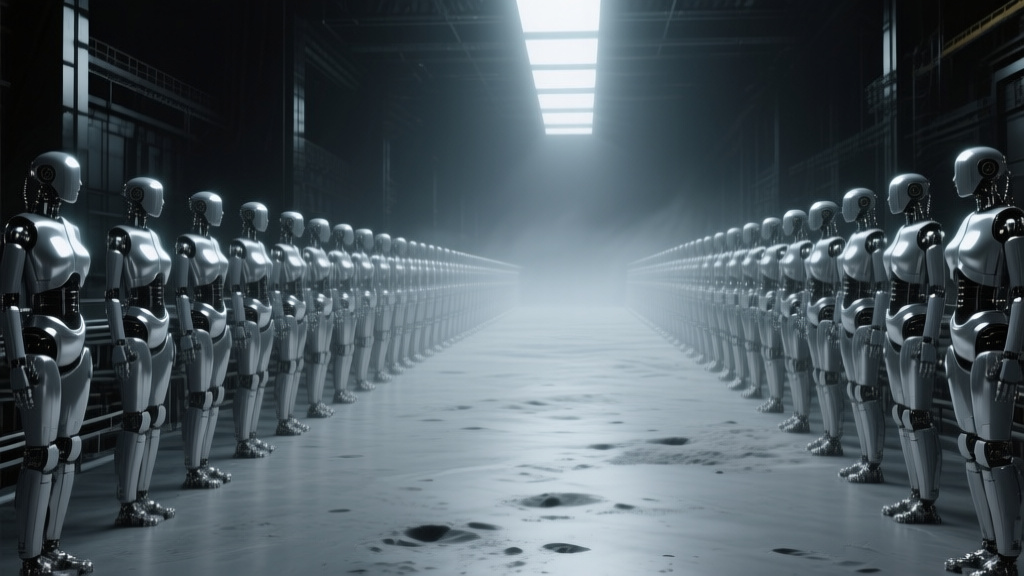
A specific Unitree bipedal humanoid robot with highly reflective silver metallic surfaces, standing centered on a desolate, cold lunar grey plateau📷 Photo by Tech&Space
- ★Unitree’s humanoid robots drop 70% in a year
- ★Market tiers emerge as prices diverge
- ★Commercial inflection point arrives without fanfare
The humanoid robotics market has quietly crossed a threshold: Unitree Robotics’ average price for a bipedal system fell from $85,000 in 2023 to $25,000 today, a 70% decline that outpaces even the steepest cost curves in consumer electronics. This isn’t a promotional discount or a limited run—it’s a recalibration of what a functional humanoid platform costs to produce at scale.
The timing is critical. Early adopters like Tesla’s Optimus and Figure AI remain in the $100,000+ range, but Unitree’s move signals a bifurcation: high-end systems for precision tasks, and a new tier of ‘good enough’ robots for logistics, maintenance, and hazardous environments. The split mirrors the 1980s PC market, where IBM compatibles and Apple Macintoshes coexisted at vastly different price points—but here, the stakes involve physical labor, not spreadsheets.
What’s missing from the hype is the operational reality: at $25,000, these systems approach the cost of a skilled industrial technician’s annual salary in many regions. That’s not a toy or a novelty. It’s the point where total cost of ownership calculations start favoring machines over humans for repetitive, high-risk tasks.
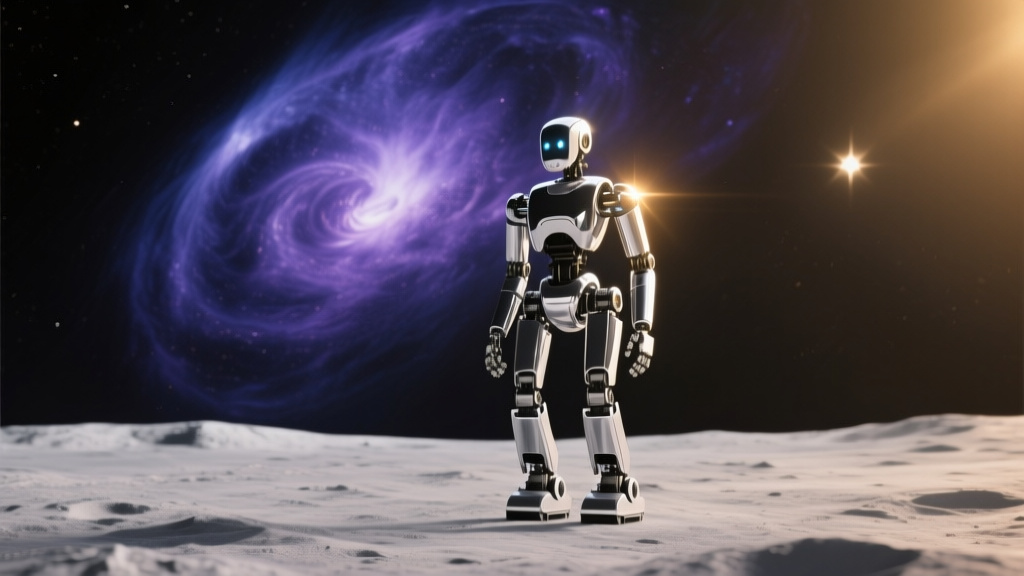
A desolate, cold lunar grey factory floor receding into a soft atmospheric haze, lined with an endless, monumental grid of highly reflective silver📷 Photo by Tech&Space
The price drop isn’t just about affordability—it’s a structural shift in robotics deployment
The drop aligns with a less obvious trend: the commoditization of core components. Unitree’s robots rely on off-the-shelf actuators and NVIDIA’s Jetson platforms, not bespoke hardware. According to industry analysts, the bill-of-materials cost for a basic humanoid has fallen below $15,000—leaving room for margins even at the new price point. This mirrors how Boston Dynamics’ Spot evolved from a $74,500 research prototype to a $40,000 commercial unit in three years.
Yet the real test isn’t price—it’s deployment. Early pilots in warehouses and nuclear facilities suggest these systems excel at structured environments but struggle with unscripted interactions. The $25,000 tier won’t replace a $150,000 Figure 01 for dexterous assembly, but it will compete with forklifts and static arms in dynamic spaces.
The open question is whether this marks the start of a Kodak moment for labor-intensive industries—or simply the first act in a longer transition. History suggests the latter: even as prices fall, adoption lags until ecosystems (training, repair networks, regulatory frameworks) catch up. For now, the signal is clear: the era of million-dollar humanoid experiments is over. The era of fleets has begun.