Laser 3D Printing Could Build Moon Bases Without Earth Resupply
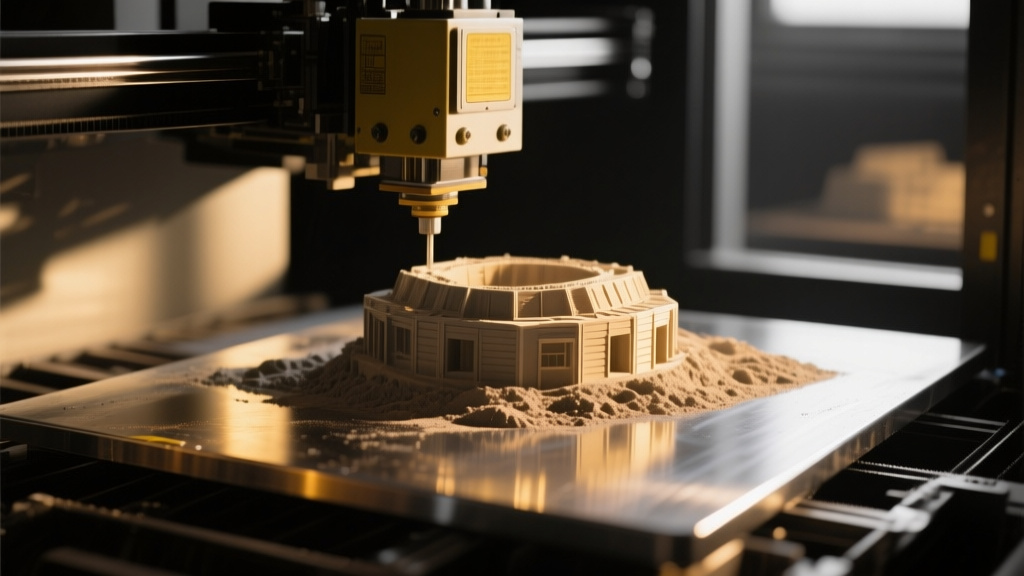
A laser sintering machine, its metal surface reflecting warm golden natural daylight, prints a intricate lunar base module with precise layers of📷 Photo by Tech&Space
- ★NASA and ESA target lunar south pole
- ★Water ice in shadowed craters enables ISRU
- ★Ohio State proposes laser-based lunar construction
NASA’s Artemis Program and parallel efforts by China, Russia, and the European Space Agency (ESA) are converging on a single, high-stakes ambition: establishing permanent human outposts near the Moon’s south pole. The target is the South Pole-Aitken Basin, where permanently shadowed regions (PSRs) cradle vast deposits of water ice—critical for drinking, oxygen, and rocket fuel. But the real bottleneck isn’t just finding these resources; it’s fabricating the infrastructure to use them without relying on Earth. Resupply missions, even at their most efficient, take days to arrive and cannot be launched regularly, making self-sufficiency non-negotiable for any viable lunar base.
Enter In-Situ Resource Utilization (ISRU), a confirmed strategy for harvesting local materials to meet crew needs. While the concept has been discussed for decades, researchers at Ohio State University (OSU) have proposed a concrete method: laser-based 3D printing using lunar regolith. The technique, outlined in a recent study, would deploy high-powered lasers to melt and fuse the Moon’s dusty surface into structural components, effectively turning the environment into a construction site. If successful, this could eliminate the need to transport massive prefabricated habitats from Earth, drastically reducing mission costs and logistical complexity.
The significance extends beyond mere construction. Water ice extracted from PSRs could be split into hydrogen and oxygen—fuel for return trips or power generation. This creates a closed-loop system where the Moon’s own resources sustain human presence, a prerequisite for any long-term settlement. The OSU team’s work aligns with NASA’s broader ISRU roadmap, which includes projects like the Mars Oxygen ISRU Experiment (MOXIE) and lunar ice-mining prototypes.
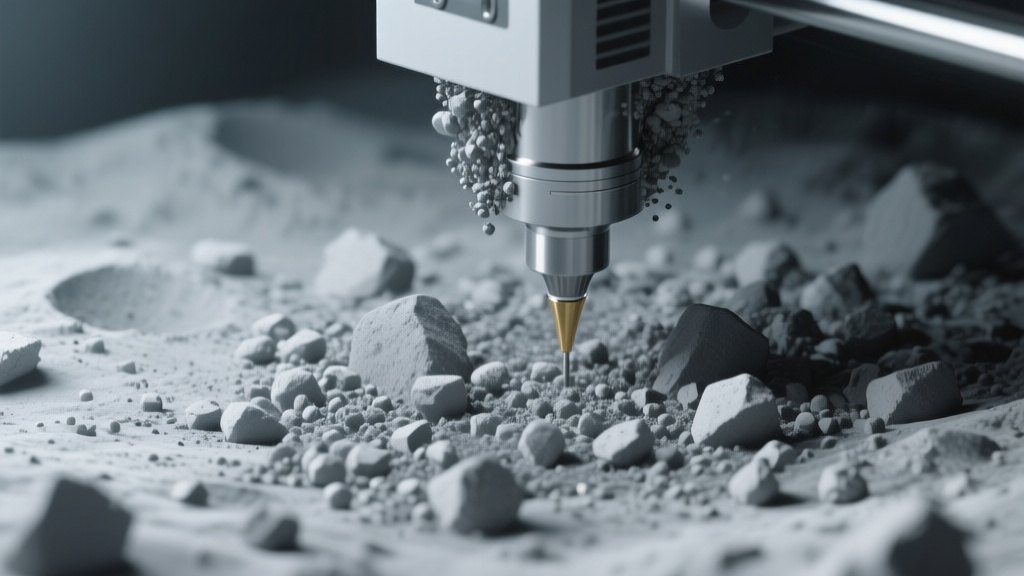
An isometric 3D macro render of lunar regolith particles—abrasive, grey, and electrostatically charged—clinging to the nozzle of a laser sintering📷 Photo by Tech&Space
The confirmed method that could slash dependency on Earth for future lunar habitats
Yet the challenges are formidable. Lunar regolith is abrasive, electrostatically charged, and varies in composition across the surface—factors that could disrupt laser sintering. The OSU study acknowledges these hurdles, emphasizing the need for controlled experiments in simulated lunar conditions before any real-world application. Additionally, the energy demands of laser-based printing are substantial; powering such systems would require advanced nuclear or solar arrays, themselves vulnerable to the Moon’s extreme temperature swings and prolonged darkness.
Despite these obstacles, the proposal represents a critical shift in how space agencies approach off-world construction. The traditional model—prefabricating habitats on Earth and launching them—is prohibitively expensive and inflexible. By contrast, ISRU-enabled fabrication allows for adaptability, enabling crews to build, repair, or expand structures as needed. The European Space Agency has already tested 3D-printed lunar bricks using simulated regolith, while NASA’s Lunar Surface Innovation Consortium is exploring similar technologies.
The real signal here isn’t just the promise of laser-printed Moon bases; it’s the recognition that future space exploration must break free from Earth dependency. Every kilogram saved from a resupply mission translates to greater scientific payloads, extended missions, or even commercial opportunities. The OSU team’s work underscores a growing consensus: the next era of lunar exploration won’t be defined by what we bring, but by what we can create there.