EU Data Breach Exposes Critical Gap in Space-Grade Cybersecurity

matte painting, hyper-detailed environment illustration, tight portrait framing, subject from mid-distance, crisp technical precision lighting, even📷 Photo by Tech&Space
- ★350GB of data stolen from EU cloud
- ★Threat actor breached Europa.eu infrastructure
- ★Cyber risks extend to satellite and research networks
The European Commission has confirmed a cyber attack on its cloud infrastructure hosting the Europa.eu platform, resulting in the theft of 350GB of data. According to Bleeping Computer, the threat actor, whose identity remains unconfirmed, exploited vulnerabilities before the Commission contained the breach. While the immediate fallout appears limited to web presence, the incident raises alarming questions about the security of interconnected systems supporting European Space Agency (ESA) missions and scientific research.
Space agencies and research institutions increasingly rely on cloud infrastructure to manage telemetry, satellite operations, and deep-space communications. The breach at Europa.eu—though not directly targeting space assets—mirrors the cyberattack on NASA’s Jet Propulsion Laboratory in 2018, where hackers accessed sensitive mission data. For agencies like ESA, which collaborates on projects like the Galileo satellite navigation system, the lines between terrestrial and orbital security are blurring.
The timing of the attack is particularly concerning. With ESA’s Juice mission en route to Jupiter and the Euclid space telescope delivering critical cosmological data, the risk of cascading vulnerabilities grows. A single breach could compromise years of research—or worse, mission-critical commands.
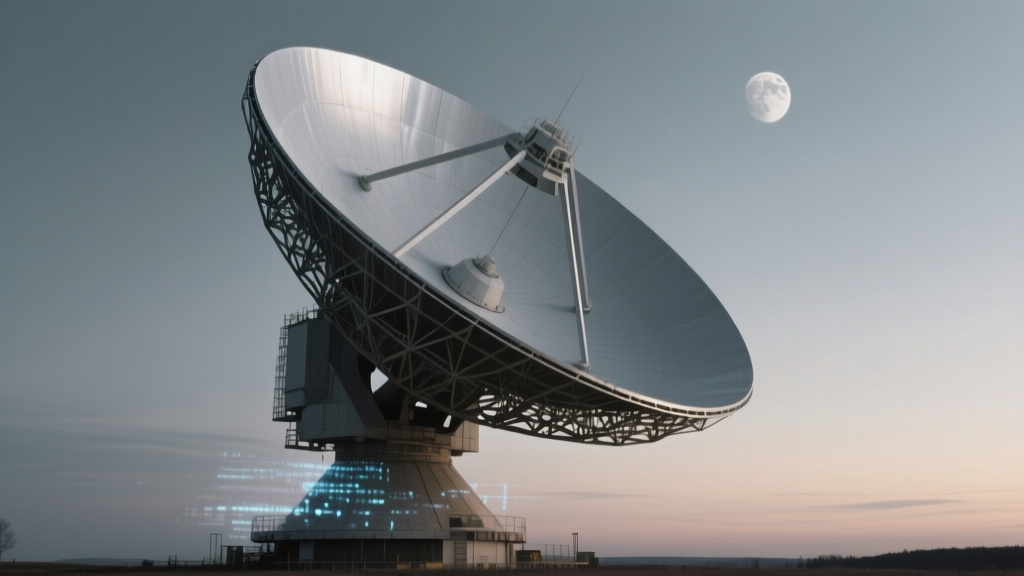
A European Space Agency ground station antenna at dusk, its silver metallic dish towering against a cold lunar grey sky, shallow depth of field📷 Photo by Tech&Space
The confirmation that changes how we secure orbital and deep-space missions
Cybersecurity in space is not a new concern, but incidents like this force a reckoning. The Space Infrastructure Cybersecurity Framework, developed by NASA and the U.S. Cybersecurity and Infrastructure Security Agency (CISA), outlines protocols for protecting ground stations, satellites, and data links. However, the Europa.eu breach suggests these measures may not be uniformly adopted—or sufficiently robust—across international partnerships.
For agencies operating in low-Earth orbit (LEO) and beyond, the stakes are existential. A 2022 report by the Aerospace Corporation warned that cyber threats could disrupt satellite operations, alter trajectory calculations, or even hijack spacecraft. The European Commission’s incident, while seemingly confined to a web portal, underscores how quickly a single vulnerability can escalate into a systemic risk.
The scientific significance here is twofold. First, data integrity is foundational to space exploration; corrupted or stolen datasets could delay discoveries or misinform policy. Second, the breach exposes a gap in accountability—who bears responsibility when a non-space entity’s cyber failure jeopardizes orbital operations? The answer may lie in tighter cross-agency protocols, but progress has been slow.
What’s next is clearer. ESA and its partners will likely accelerate audits of cloud providers, mandate multi-factor authentication for critical systems, and isolate mission data from broader networks. Yet, as recent attacks on SpaceX’s Starlink demonstrate, even the most advanced programs are not immune. The real signal here is not the breach itself, but the reminder that space infrastructure is only as secure as its weakest terrestrial link.