SES bets on MEO with 28-satellite order for 2030 network
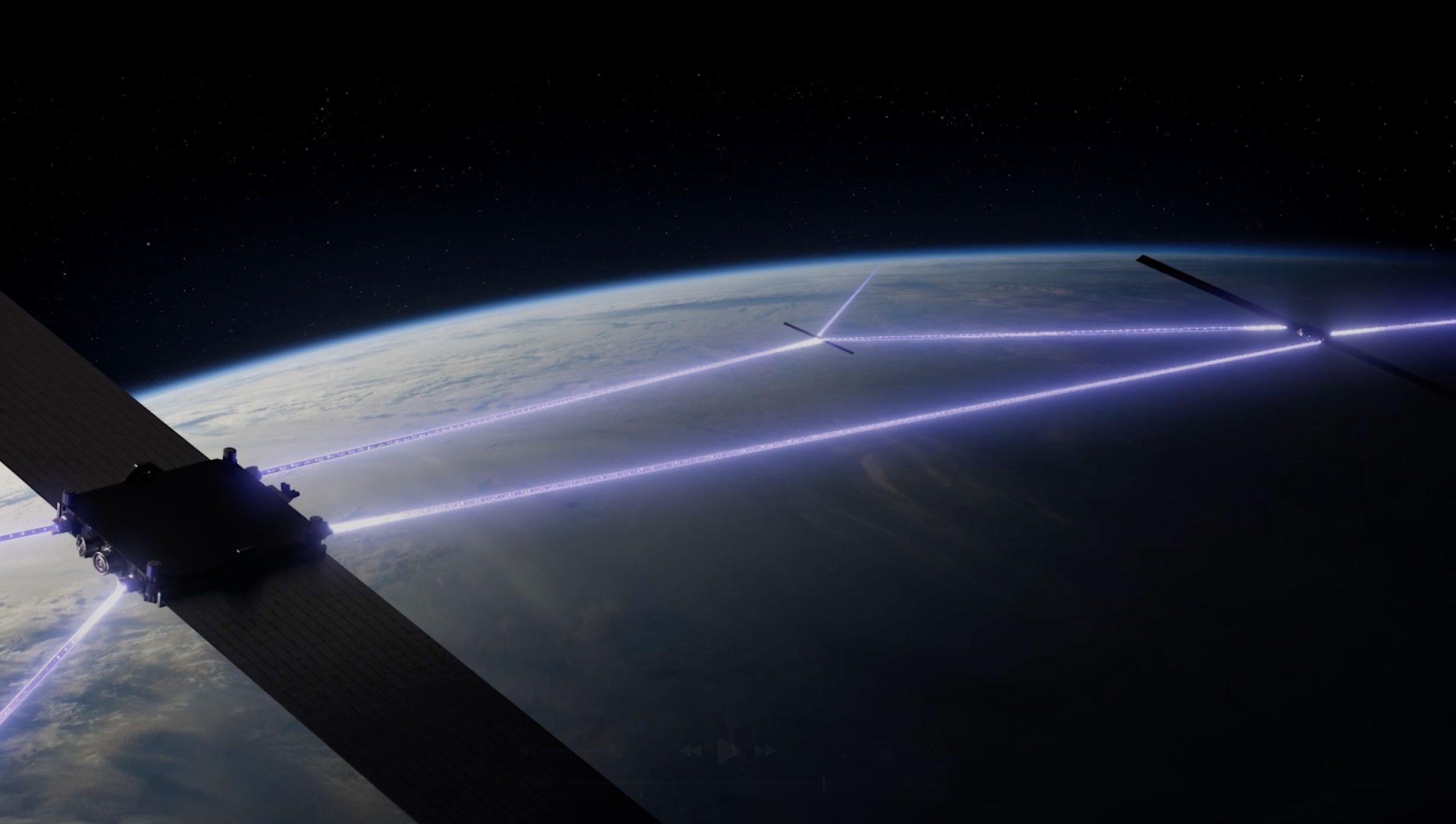
Unique perspective: Isometric 3D render of the SES meoSphere network's 28 satellites in medium Earth orbit, with a focal point on a single silver📷 Photo by Tech&Space
- ★SES locks 28 K2 Space satellites for MEO expansion
- ★meoSphere targets 2030 operational timeline
- ★MEO’s role in bridging LEO and GEO capabilities
The race to dominate medium Earth orbit (MEO) just got a 28-satellite boost. SES’s order from K2 Space for its meoSphere network isn’t just another bulk purchase—it’s a strategic bet on MEO’s untapped potential to bridge the latency gap between low Earth orbit (LEO) constellations and geostationary (GEO) behemoths. By targeting a 2030 operational date, SES is positioning meoSphere as the infrastructure backbone for applications demanding both speed and coverage, from secure government comms to next-gen IoT.
This isn’t SES’s first foray into MEO. The company’s O3b mPOWER constellation already demonstrated MEO’s advantages—lower latency than GEO, wider coverage than LEO—with a focus on enterprise and mobility markets. But meoSphere scales that ambition. The initial 28-satellite order from K2 Space, a startup specializing in scalable satellite manufacturing, signals confidence in MEO’s cost-efficiency at scale. K2’s modular production approach, designed to slash lead times, aligns with SES’s need to deploy rapidly while maintaining flexibility for future upgrades.
The timeline is telling. A 2030 target suggests SES is betting on MEO’s long-term viability, even as LEO mega-constellations like Starlink and OneWeb grab headlines. MEO’s sweet spot—orbits between 2,000 and 35,786 km—offers a compromise: global coverage without the hand-off complexity of LEO, and latency far below GEO’s half-second delays. For missions requiring persistent, high-throughput links—think autonomous shipping or tactical military networks—MEO could be the Goldilocks zone.

Detailed view of K2 Space's automated production line, with a stylized 3D rendering of a satellite component being manufactured, under cold and📷 Photo by Tech&Space
A calculated move to redefine mid-orbit connectivity
Yet the real test isn’t the technology, but the economics. MEO’s value proposition hinges on two assumptions: that demand for mid-latency services will outpace LEO’s capacity, and that manufacturing costs can drop enough to compete with LEO’s economies of scale. K2 Space’s involvement is critical here. The startup’s automated production lines, backed by $100M in funding, aim to cut per-satellite costs by 40%—a figure that, if achieved, would make MEO constellations financially viable beyond niche markets.
What’s missing from the announcement? Concrete details on meoSphere’s frequency bands, inter-satellite laser links, or partnerships with ground segment providers. These omissions aren’t oversights—they’re strategic silences. SES is likely negotiating spectrum allocations and tech partnerships behind the scenes, knowing that MEO’s success depends as much on regulatory agility as on engineering.
The broader implication is clear: MEO is no longer a theoretical middle ground. With meoSphere, SES is forcing the industry to treat it as a third orbital layer with distinct advantages. If successful, this could reshape how we think about orbital slots—not as a binary choice between LEO and GEO, but as a spectrum of options tailored to specific use cases. The question now isn’t whether MEO will work, but who will define its standards.