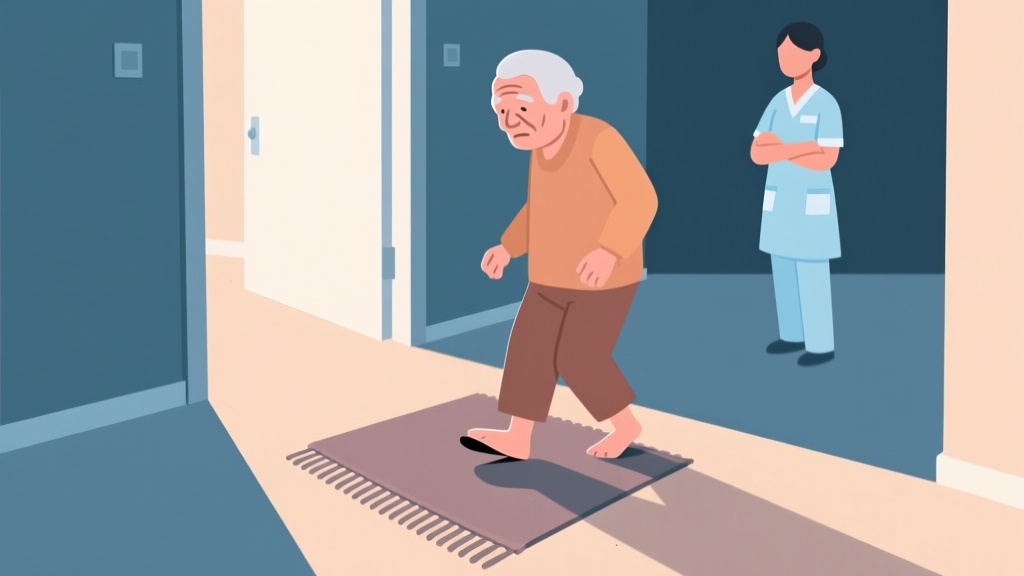
A minimal vector concept art scene in isometric tilted perspective: an elderly stroke survivor in warm skin tones steps carefully over a loosely📷 Photo by Tech&Space
- ★33% falls reduction
- ★Home-based program
- ★Australian research
Australian researchers conducted a study, known as the 'falls after stroke trial' (FAST), which was published in the British Medical Journal. The study found a 33% reduction in falls over 12 months. According to MedicalXpress, the home-based program included functional exercise, preventing hazards around the home, and out-of-home mobility coaching.
The study's results are significant, as falls are one of the most dangerous risks faced by survivors of stroke. The British Medical Journal publication of the study adds credibility to the findings. However, it is essential to consider the study's limitations, including the sample size and methodology.
The program's effectiveness can be attributed to its comprehensive approach, which addressed various aspects of the participants' lives. As reported by The Conversation, the study's authors noted that the program's success was due to its tailored nature, allowing participants to receive personalized guidance and support.
cinematic photography, shallow depth of field, golden hour, soft atmospheric haze, gentle diffused glow. A close-up detail or consequence scene from:📷 Photo by Tech&Space
A large study with real limits
The study's findings have implications for the treatment and care of stroke survivors. As Healthline notes, falls are a significant concern for individuals who have experienced a stroke, and reducing the risk of falls can greatly improve their quality of life. The study's results suggest that a home-based program can be an effective way to achieve this goal.
However, it is crucial to consider the study's limitations and the need for further research. The National Institutes of Health website provides information on the importance of continued research in this area. While the study's findings are promising, more research is needed to fully understand the program's effectiveness and to determine its potential for widespread implementation.
In conclusion, the 'falls after stroke trial' study provides valuable insights into the effectiveness of a home-based program in reducing falls among stroke survivors. As ScienceDaily reports, the study's findings have the potential to inform the development of new treatments and care strategies for individuals who have experienced a stroke.