
TOPCon Closes Gap with Heterojunction📷 Published: Apr 17, 2026 at 24:17 UTC
- ★TOPCon efficiency nears heterojunction
- ★Greater wafer tolerance achieved
- ★Lower fabrication costs
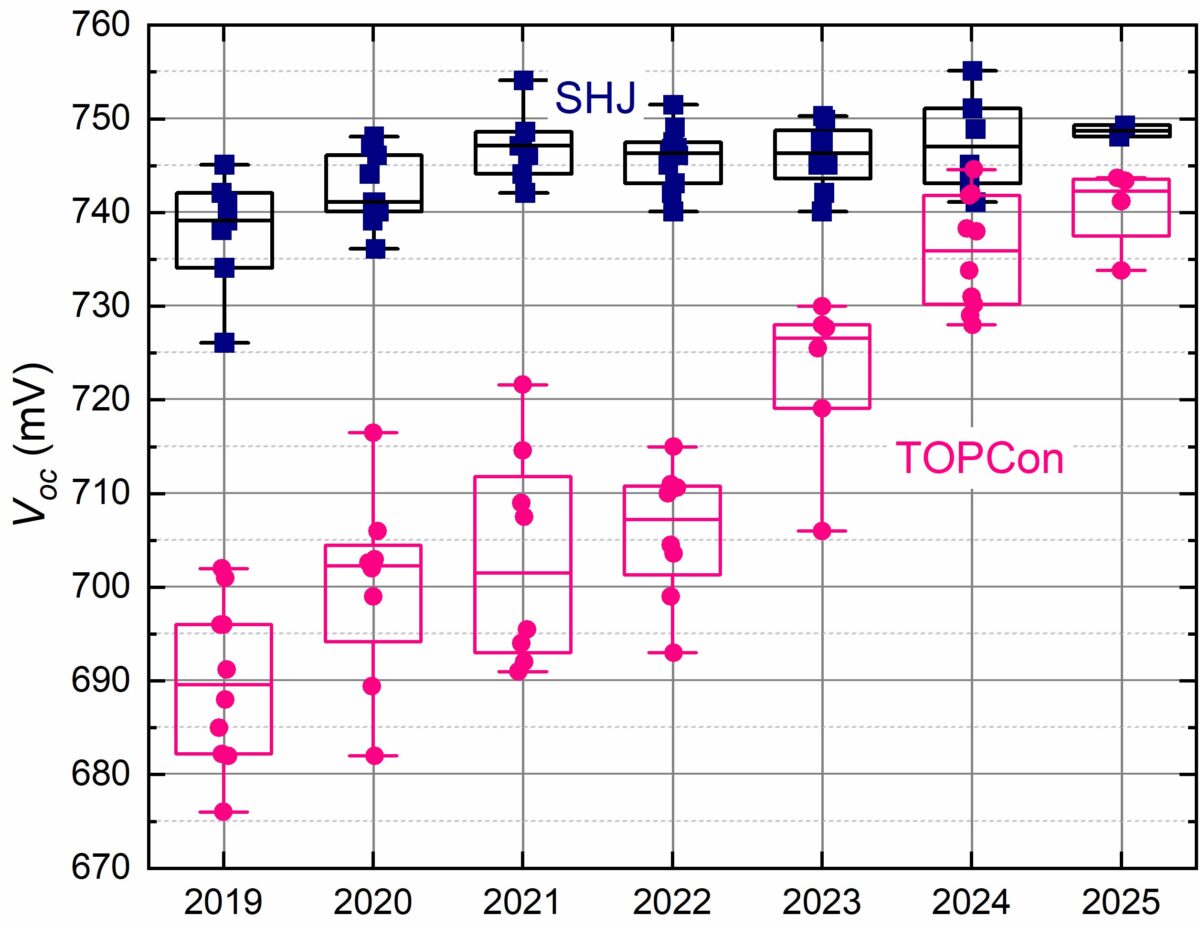
Australian scientists have made a significant breakthrough in perovskite-silicon tandem solar cells, with TOPCon cells rapidly closing the open-circuit voltage gap with heterojunction counterparts. This development has major implications for the solar industry, as TOPCon cells offer greater wafer tolerance and high industrial scalability. Despite slightly lower efficiency, TOPCon-based perovskite-silicon tandems can achieve a levelized cost of energy comparable to heterojunction-based tandems due to reduced fabrication costs.
The study, published in PV Magazine, highlights the rapid progress being made in TOPCon development, with the voltage gap now under 10 mV. This is a significant milestone, as it brings TOPCon cells closer to the efficiency of heterojunction cells, while maintaining the advantages of greater wafer tolerance and lower production costs.
The real-world gap that specs don't show📷 Published: Apr 17, 2026 at 24:17 UTC
The real-world gap that specs don't show
The findings of this study have important implications for the future of solar energy production. As the demand for renewable energy sources continues to grow, the development of more efficient and cost-effective solar cells is crucial. TOPCon cells, with their greater wafer tolerance and lower fabrication costs, may offer a more viable alternative to heterojunction cells in the long run. However, further research is needed to fully realize the potential of TOPCon cells and to address any challenges that may arise during the scaling-up process.
The use of perovskite-silicon tandem solar cells has the potential to significantly increase the efficiency of solar energy production, and the development of TOPCon cells is an important step towards achieving this goal. As the solar industry continues to evolve, it will be interesting to see how TOPCon cells compare to heterojunction cells in terms of efficiency, cost, and overall performance.
In other words, the future of solar energy production may depend on the success of TOPCon cells in bridging the efficiency gap with heterojunction cells.