The 1300°F memory chip that outlasts molten lava
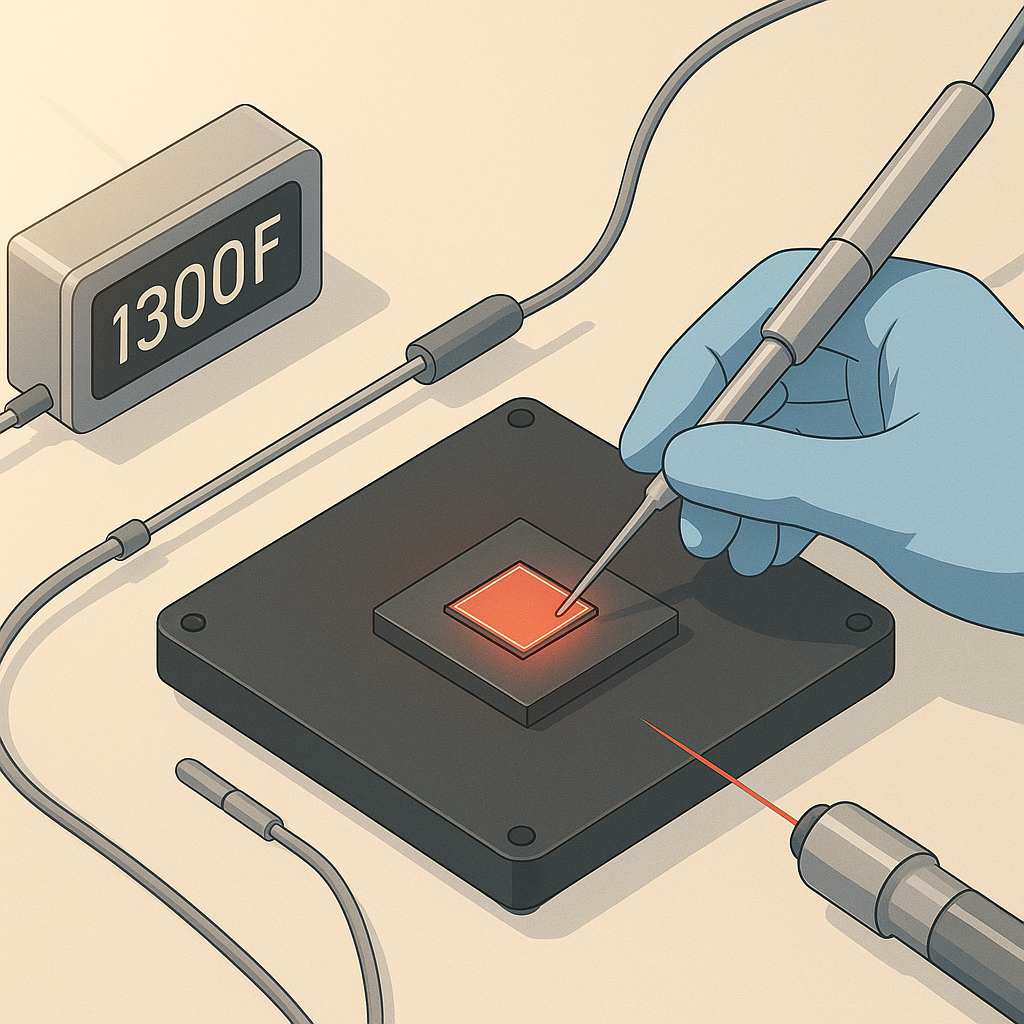
The 1300°F memory chip that outlasts molten lava📷 Published: Apr 7, 2026 at 08:27 UTC
- ★700°C operation shatters silicon’s thermal ceiling
- ★Accidental discovery reveals atomic-level heat resistance
- ★AI workloads could move into extreme environments
The thermal limit of silicon has been electronics’ hard stop for decades: push past 125°C, and data corrupts, circuits fail, and systems melt. This new device, detailed in Nature Electronics, doesn’t just nudge that limit—it obliterates it by operating at temperatures hotter than a pizza oven’s self-cleaning cycle. The team at MIT’s Microelectronics Lab stumbled on the solution while testing layered materials for quantum computing, only to find their prototype refused to die under extreme heat.
The trick lies in the chip’s atomic architecture. Unlike silicon, which degrades as heat agitates its lattice structure, this stack uses tungsten diselenide for memory storage and boron nitride as an insulator—materials that maintain stability even when electrons start misbehaving. Early tests show it retains data for hours at 700°C, a feat that makes today’s high-temp military-grade chips look like snowflakes. For context: NASA’s Venus lander electronics fail at 500°C.
But here’s the catch: this isn’t a drop-in replacement for your laptop’s RAM. The chip’s write speeds are glacial compared to DRAM, and its energy efficiency plummets at lower temperatures. It’s a niche tool—for now.
Why this isn’t just a lab stunt—it’s a supply chain earthquake📷 Published: Apr 7, 2026 at 08:27 UTC
Why this isn’t just a lab stunt—it’s a supply chain earthquake
The immediate winners? Industries where heat isn’t a bug but a feature. Oil drilling sensors buried kilometers underground, jet engine controllers monitoring turbine blades, and even nuclear reactor instrumentation could finally ditch bulky cooling systems. For AI, the implications are more speculative but tantalizing: data centers near geothermal vents or in deserts might run hotter (and cheaper) without performance drops. One semiconductor analyst called it ‘the first credible path to in-situ computing in extreme environments.’
Yet the ecosystem isn’t ready. Foundries lack tools to mass-produce tungsten-diselenide at scale, and the chip’s voltage requirements clash with standard CMOS processes. Early adopters will pay a premium—think 10x the cost of conventional memory—until yields improve. And let’s be clear: no one’s training LLMs on these yet. The real near-term play is edge AI in industrial IoT, where reliability trumps raw speed.
The team’s next hurdle? Proving durability over years, not hours. As one materials scientist noted on Twitter, ‘700°C stability is impressive until you realize a jet engine cycles through that range 10,000 times a year.’