Semi-transparent solar panels just made greenhouses smarter
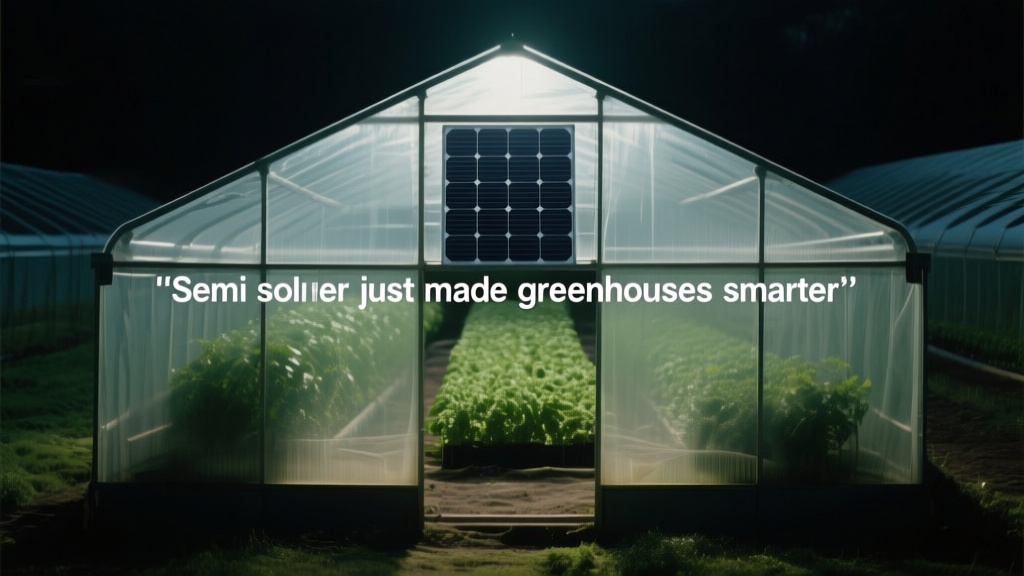
Semi-transparent solar panels just made greenhouses smarter📷 Source: Web
- ★25% heavier tomatoes under silicon PV greenhouses
- ★726.8 kWh generated over two seasons
- ★Cadmium telluride PV lagged in agrivoltaic performance
Spanish researchers didn’t just prove agrivoltaics work—they quantified how much better. A semi-transparent silicon PV greenhouse delivered a 25% boost in tomato fruit weight while generating 726.8 kWh over two growing seasons. That’s not just a win for farmers; it’s a rare case where renewable energy directly improves agricultural output instead of competing for land.
The kicker? This wasn’t some boutique experiment. The silicon-based system outperformed both cadmium telluride PV (a common thin-film alternative) and traditional shaded controls. The study, published in Applied Energy, highlights a sweet spot: enough light for plants, enough opacity for power, and enough thermal regulation to avoid stressing the crops. It’s the kind of balance that turns a niche idea into a scalable one.
But here’s the catch: the numbers don’t tell you about the upfront cost of retrofitting greenhouses or whether this scales beyond tomatoes. Early adopters will care less about the 25% yield bump and more about whether the energy savings offset the premium for semi-transparent panels. And that’s where the rubber meets the road.
The real-world tradeoffs behind combining crops and solar panels📷 Source: Web
The real-world tradeoffs behind combining crops and solar panels
The agrivoltaic market isn’t waiting for perfect data. Companies like Sun’Agri in France and BlueWave Solar in the U.S. are already deploying similar systems, betting that dual-use land will appeal to regulators and investors alike. The Spanish study adds critical validation: silicon PV isn’t just viable—it’s superior to CdTe in this context, at least for high-value crops like tomatoes.
Yet the missing details matter. The study doesn’t specify greenhouse size, local climate, or whether the 726.8 kWh output accounts for energy used by the greenhouse itself (ventilation, irrigation, etc.). Without those, it’s hard to model ROI for a commercial grower. And while 25% heavier tomatoes sound great, the real test is net profit per square meter—something this research leaves unanswered.
For now, the signal is clear: agrivoltaics are moving from ‘interesting’ to ‘inevitable’ for certain crops and climates. The question isn’t if but where—and whether the supply chain for semi-transparent panels can keep up with demand.