Tongwei’s HBC solar bet: Efficiency vs. manufacturing reality
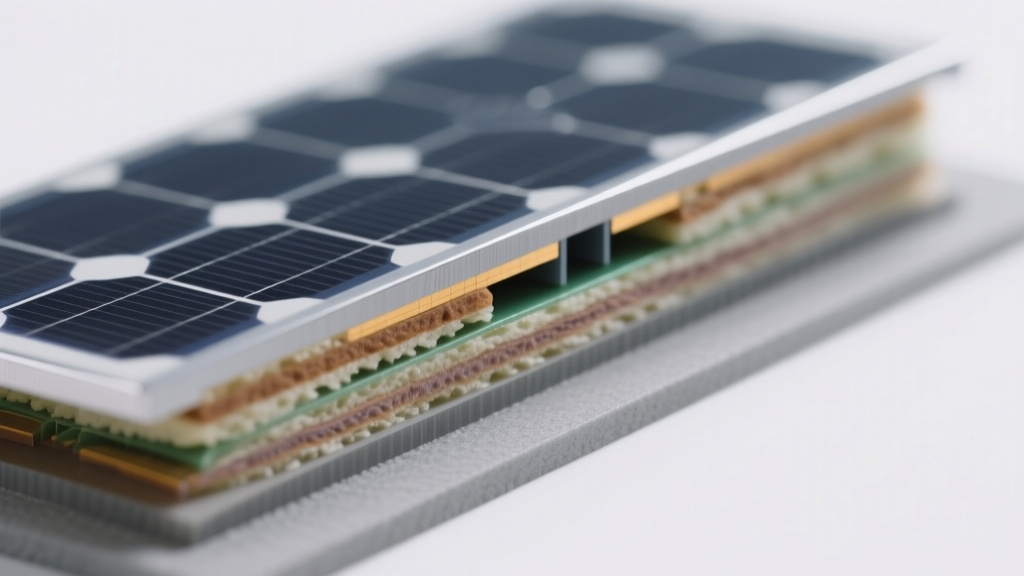
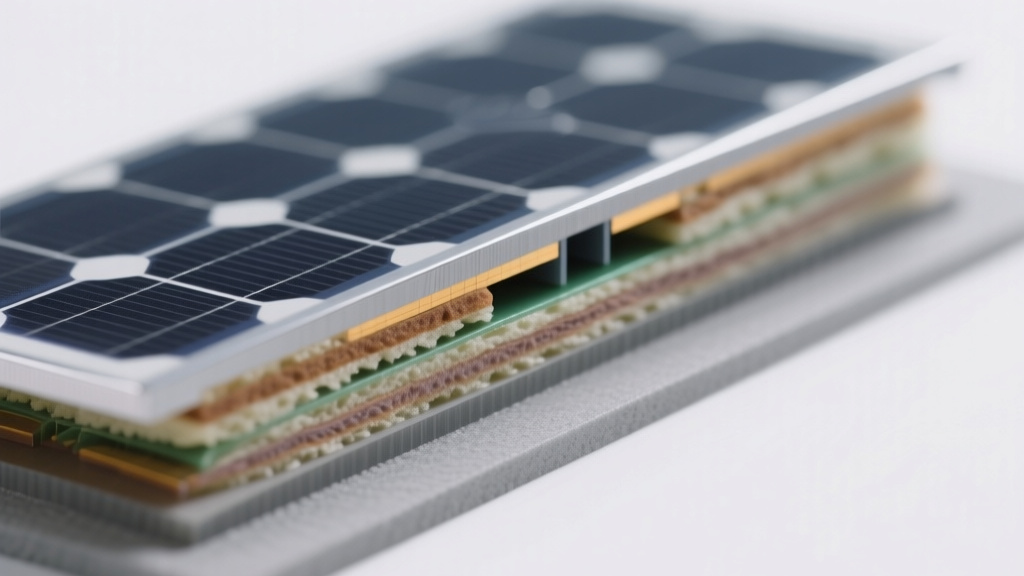
A cross-section of a hybrid heterojunction back-contact solar cell revealing its internal layered sandwich structure, with distinct tunneling oxide📷 Photo by Tech&Space
- ★HBC cells merge three solar techs into one
- ★Grid-free front side cuts shading losses by ~5%
- ★TOPCon players now face a hybrid competitor
Tongwei isn’t just scaling another solar cell—it’s gambling that manufacturers can handle a Frankenstein of three distinct technologies. The Chinese solar giant’s partnership with GS-Solar and Golden Solar targets hybrid heterojunction back-contact (HBC) cells, which stack heterojunction passivation, TOPCon’s tunneling oxide/polysilicon layers, and a grid-free front side borrowed from back-contact designs. On paper, this trims optical losses (no metal grid shading) while boosting efficiency past 26%—but the real test is whether factories can stabilize yield across three finicky processes.
The grid-free front side is the sleeper feature here. Traditional cells lose ~3-5% efficiency to metal grid shading; HBC’s buried contacts eliminate that, but require precision alignment during production. PV Magazine’s reporting confirms the design also simplifies module assembly—fewer soldering steps mean lower thermal stress. Yet for installers, the upside isn’t just watts per square meter: fewer front-side components could mean fewer failure points over 25 years.
This isn’t an incremental tweak. It’s a direct challenge to TOPCon’s dominance in n-type cells, where manufacturers like JinkoSolar and LONGi have already sunk billions into scaling. HBC’s hybrid approach could let Tongwei leapfrog them—but only if it can prove the cell’s three-layer stack doesn’t turn into a yield nightmare at gigawatt scale.
clean product-style photography, controlled studio setup, deep moody shadows with single accent highlight. A close-up detail or consequence scene📷 Photo by Tech&Space
The production tradeoffs behind a 26%+ efficiency play
The market context is brutal. TOPCon cells now account for ~40% of new n-type capacity, per Wood Mackenzie, and their 25%+ efficiency is already commoditizing. HBC’s promise of 26%+ might not justify the switch unless Tongwei can undercut TOPCon on cost—something the grid-free design should help with, by reducing silver paste usage. But silver savings won’t matter if the tunneling oxide layer adds complexity to deposition tools, or if heterojunction’s temperature sensitivity rears its head in real-world deployments.
For commercial buyers, the math changes if HBC modules hit the market at a 5-10% premium but deliver 8-12% more energy over their lifespan (thanks to lower temperature coefficients and no shading). That’s the kind of tradeoff large-scale solar farms might accept—but rooftop installers, obsessed with upfront $/Watt, could balk. Early adopters will likely be utility-scale projects in high-irradiance regions, where the efficiency bump outweighs the risk of unproven durability.
The wild card? China’s 2024 solar manufacturing overcapacity. With TOPCon lines already running below 80% utilization, Tongwei’s HBC play looks like a hedge against a price war. If it can’t hit 90%+ yields within 18 months, this ‘hybrid’ might just become another niche—like bifacial PERC before it.