Artemis II Arrival: The Crew That Will Test Lunar Deep Space
Wikipedia / Wikimedia Commons, Source — Wikimedia Commons📷 Source: Web
- ★First crewed lunar flyby since Apollo 17
- ★CSA’s Hansen marks Canada’s deep-space debut
- ★Flight hardware now enters final pre-launch validation
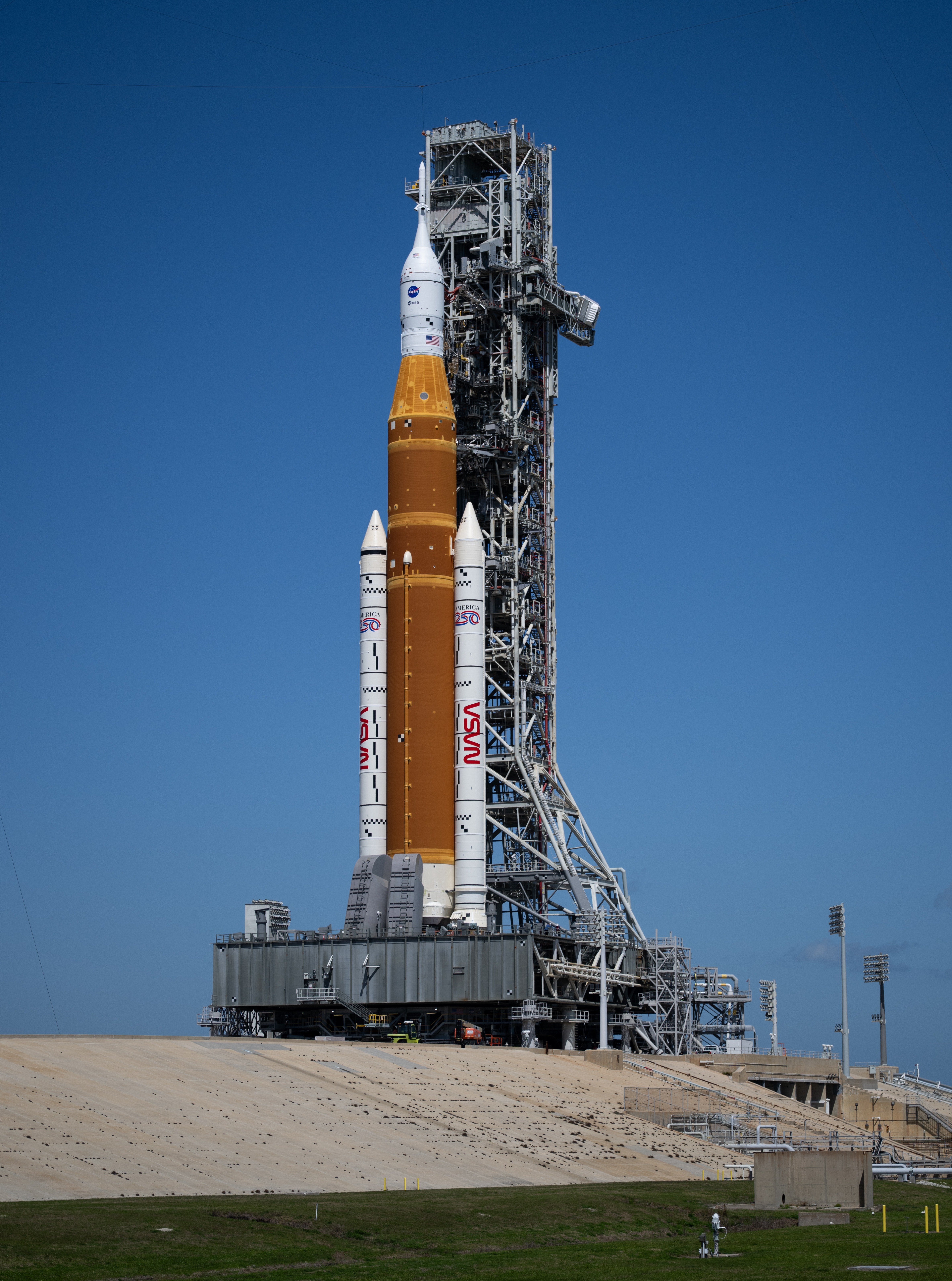
The four astronauts of Artemis II arrived at Kennedy Space Center this week not as spectators, but as the first humans in over half a century to prepare for a lunar flyby. Their mission—scheduled for November 2024—will carry them 8,900 kilometers beyond the Moon’s far side, farther than any human has traveled since 1970. This isn’t a landing; it’s a stress test for NASA’s Orion spacecraft and the Space Launch System under deep-space conditions, where Earth’s communications lag by seconds and radiation exposure climbs.
Commander Reid Wiseman, pilot Victor Glover, and mission specialists Christina Koch (all NASA) and Jeremy Hansen (CSA) represent the first crew to validate hardware designed for eventual Mars missions. Their arrival at KSC marks the transition from years of simulations to final pre-flight checks—including suit fits, emergency drills, and integration with the Orion capsule now undergoing thermal vacuum testing. The crew’s public briefing today will likely emphasize the mission’s dual role: proving lunar operations while pushing systems to their limits for Mars.
What makes this milestone distinct isn’t the spectacle of arrival, but the quiet confirmation that every major component—from the European Service Module to the launch abort system—has passed ground tests. The real signal here is that NASA’s timeline for sustained lunar presence remains, for now, on track.

Artemis II Arrival: The Crew That Will Test Lunar Deep Space📷 Source: Web
A Mission That Isn’t Just About the Moon—It’s About Mars
Artemis II fits into a larger sequence that extends far beyond 2024. This mission is the only planned crewed test of Orion’s life-support and navigation systems in deep space before Artemis III attempts a lunar landing in 2025 or 2026. The data gathered during the 10-day flight—particularly on radiation shielding and manual piloting in lunar orbit—will directly inform whether NASA’s Lunar Gateway can serve as a viable staging point for Mars missions.
The inclusion of CSA’s Jeremy Hansen isn’t symbolic. Canada’s Canadarm3 will be critical for Gateway assembly, and Hansen’s role reflects the shift from bilateral U.S.-Russia dominance to a multilateral lunar economy. Yet questions remain about the SLS’s long-term sustainability—each launch costs over $4 billion, and private alternatives like SpaceX’s Starship could redefine the program’s economics before Artemis IV.
For all the focus on hardware, the crew’s most important task may be demonstrating that humans can operate effectively in the van Allen belts and beyond. Koch, who holds the record for the longest single spaceflight by a woman, and Glover, the first Black astronaut on a lunar mission, bring operational experience that will shape how NASA mitigates the physiological risks of deep-space travel.