TI + NVIDIA’s robot push: Demo vs. deployment reality
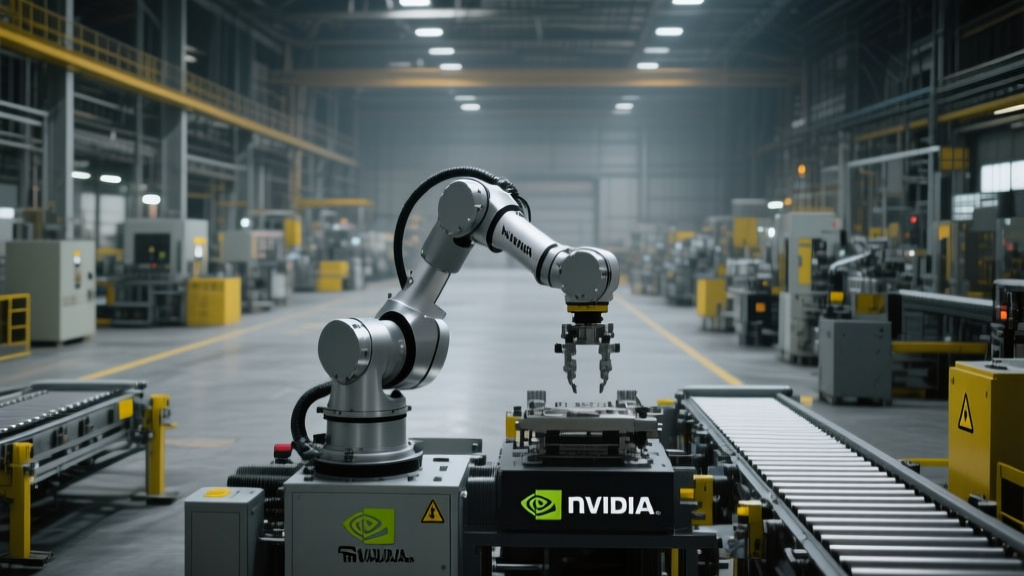
TI + NVIDIA’s robot push: Demo vs. deployment reality📷 Published: Mar 25, 2026 at 12:00 UTC
- ★AI compute and control in one architecture
- ★The warehouse is harder than the demo
- ★Energy and certification decide everything

Texas Instruments and NVIDIA are trying to build a robotics stack that combines AI compute with deterministic control. That sounds like a good answer to the split between what a robot thinks and what it must do in milliseconds. The Robot Report frames the partnership as a real attempt to move physical AI out of the slide deck and into places where latency and failure matter.
In practice, this matters most in predictable environments: warehouses, logistics, and structured manufacturing. But even there, a robot has to survive energy use, sensor swaps, and the small failures that do not look glamorous on a slide. If the stack only works in a clean demo room, then the problem is postponed, not solved.
TI and NVIDIA are really trying to shorten the path from simulation to a real system. In TI’s official announcement, the emphasis is on motor control, mmWave radar, and power, while NVIDIA’s robotics announcement shows the sector moving away from “AI brain” marketing toward a full physical stack. That distinction matters: industry does not only need a smart model, but stable electronics that survive cable faults, heat, and service cycles.
A smart stack, a hard reality📷 Published: Mar 25, 2026 at 12:00 UTC
A smart stack, a hard reality
The biggest test will be safety, certification, and how quickly the system can fit into existing workflows. Industry does not buy the smartest algorithm; it buys something that can be serviced, powered, and maintained without chaos on the third shift.
That is the real value of this partnership: a push to narrow the gap between AI ambition and factory life. If it works, it will be useful for the whole category. If it does not, it becomes another example of how warehouses are always harsher than presentations.