Ancient sheep DNA rewrites the plague’s origin story
modern corporate editorial photography, low-angle upward perspective, subject feels monumental, studio-controlled clean lighting, no ambient shadows.📷 Photo by Tech&Space
- ★4,000-year-old sheep carried Yersinia pestis
- ★First non-human Bronze Age plague host found
- ★Flea-free transmission mystery deepens
A domesticated sheep buried 4,000 years ago in the Ural Mountains has delivered an unexpected medical time capsule. Scientists sequencing ancient DNA from the animal’s remains detected Yersinia pestis, the bacterium responsible for plague—marking the first discovery of the pathogen in a non-human host from the Bronze Age ScienceDaily. The find confirms that plague was already circulating in Eurasia millennia before the Black Death, but with a crucial twist: this ancient strain lacked the genetic adaptations that allow modern Y. pestis to spread via fleas.
The discovery upends long-held assumptions about the plague’s transmission routes. Until now, researchers puzzled over how the disease could have traveled so widely without fleas as intermediate hosts. The sheep’s DNA suggests direct zoonotic spillover—possibly through close contact between humans and livestock—might have been the primary driver. But with a sample size of just one animal, the picture remains incomplete. The study, published in Science, is observational and relies on genetic sequencing of a single specimen, limiting its ability to draw broader conclusions about transmission patterns.
For patients today, this finding has no immediate clinical relevance. Y. pestis remains a rare but treatable infection, and the ancient strain’s inability to spread via fleas doesn’t change current public health strategies. However, the discovery does highlight the enduring adaptability of pathogens—and the gaps in our understanding of their evolutionary paths. The real value lies in what it doesn’t prove, not what it does.

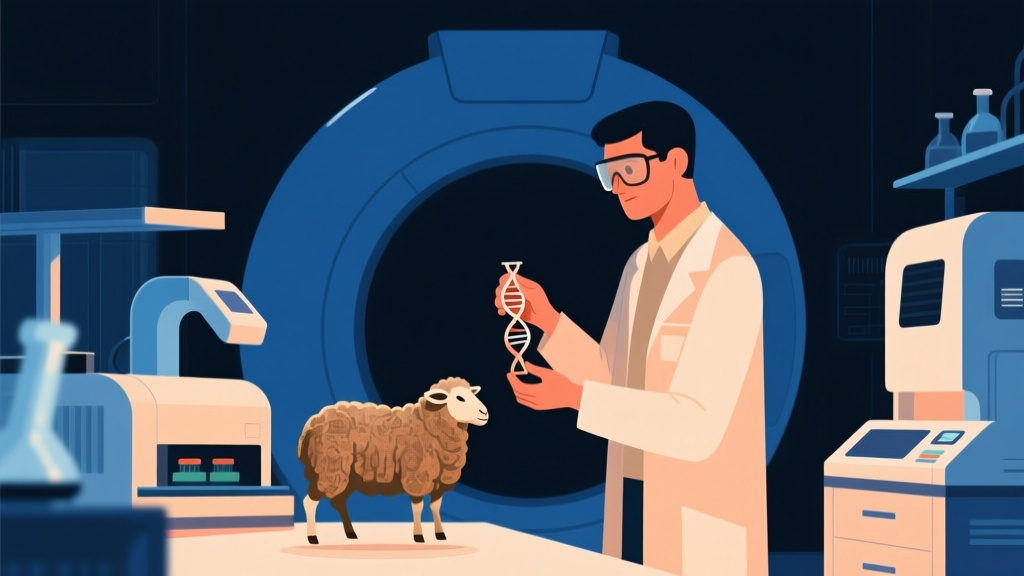
A researcher in a lab, surrounded by modern sequencing equipment, carefully holding a small, ancient DNA sample from the Bronze Age sheep, with a📷 Photo by Tech&Space
A single Bronze Age sheep reveals a plague strain that couldn’t jump like the Black Death—raising new questions about how it spread
What this study underscores is the importance of revisiting historical disease narratives with modern tools. The flea-dependent model of plague transmission has dominated scientific discourse for decades, but this Bronze Age sheep suggests the bacterium had alternative ways of jumping between hosts. If confirmed, this could rewrite epidemiologists’ understanding of how early pandemics spread across trade routes and human settlements. However, the study’s limitations are significant. A single sample from one geographic location cannot establish a pattern, and the lack of additional Bronze Age non-human hosts leaves key questions unanswered.
The clinical community is taking note, albeit cautiously. Historically, Y. pestis has been one of the most devastating pathogens in human history, and uncovering its origins could help predict future outbreaks. Yet, this discovery raises more questions than it answers. Were there other animal reservoirs? Did humans contract it through direct contact, or were there other vectors at play? The study’s authors emphasize that their findings are a starting point, not a conclusion—underscoring the need for broader sampling of ancient DNA from both human and animal remains.
For now, this research remains firmly in the realm of academic curiosity. It doesn’t change treatment protocols, vaccine development, or public health policies. But it does remind us that the past holds clues we’ve barely begun to uncover. The next steps? Expanding the search for plague DNA in other ancient animals—and tracing the bacterium’s evolutionary timeline to see how it adapted to become the flea-borne scourge of the medieval era.