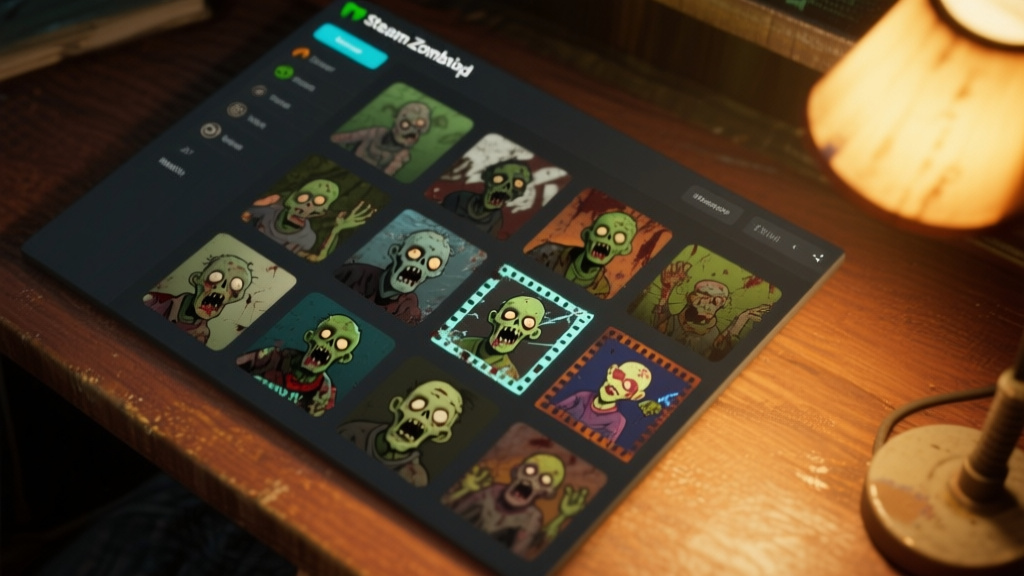
Zomboid’s mod purge: Malicious code lurked in plain sight📷 Published: Apr 9, 2026 at 04:11 UTC
- ★12+ Steam Workshop mods banned for hidden malware
- ★Uninstalling isn’t enough—players urged to scan systems
- ★Obfuscation tricks reveal deeper mod security risks
Project Zomboid’s developers just dropped a security bomb: over a dozen Steam Workshop mods were quietly pulling a bait-and-switch, packing heavily obfuscated code that generated malicious files on players’ systems. The mods are gone from the Workshop now, but the damage isn’t just a bad update—it’s a wake-up call. According to PC Gamer’s report, uninstalling them isn’t enough; players need to run full system scans to root out whatever these mods left behind.
The real kicker? This wasn’t some sloppy script kiddie operation. The obfuscation suggests someone went to serious lengths to hide the malware, likely counting on players to assume ‘it’s just a mod’ and look the other way. Community chatter on Reddit and Steam forums already shows the usual split: veterans nodding grimly (‘told you mod security was a joke’), while newer players panic-overreact (‘do I factory-reset my PC now?’). But the devs’ warning cuts through the noise: this is a systemic risk, not a one-off glitch.
What’s still unclear is whether these mods were actively exploited or just ticking time bombs. Early signals suggest the latter—no reports (yet) of mass data theft or ransomware—but the fact that any of this slipped through Steam’s Workshop vetting is a problem. And let’s be real: Zomboid’s modding scene thrives on trust. If players now have to treat every ‘quality of life’ mod like a potential Trojan, the whole ecosystem takes a hit.

The mods you trusted might’ve been trojan horses all along📷 Published: Apr 9, 2026 at 04:11 UTC
The mods you trusted might’ve been trojan horses all along
The modding community’s reaction follows a familiar script: first denial, then rage, then reluctant acceptance. Some argue this is an overreaction (‘it’s just a few bad apples!’), while others point out that ‘a few bad apples’ can spoil the whole barrel when they’re injecting malware. The Steam Workshop’s mod approval process has always been more ‘upload and pray’ than ‘rigorous security audit’—a trade-off for speed and accessibility. But incidents like this expose the cost of that trade-off.
For Zomboid players, the immediate fallout is a trust crisis. The game’s hardcore survivalist crowd already lives by ‘verify, then trust’—now that mantra applies to mods too. Expect a surge in demand for open-source mod tools or third-party vetting (if the community can organize it). The devs’ advice to ‘take appropriate security measures’ is vague, but Malwarebytes and similar tools are suddenly getting a lot of love in Zomboid Discord servers.
The bigger question is whether this changes anything long-term. Steam’s Workshop isn’t going to start manually reviewing every mod’s code overnight. Players will likely default to ‘stick to the big-name mods’—until the next breach proves that’s not foolproof either. In the meantime, the modders who weren’t hiding malware are the ones paying the price: their downloads are tanking as players hit the ‘better safe than sorry’ uninstall button.