Databricks buys AI security startups—hype or real edge?
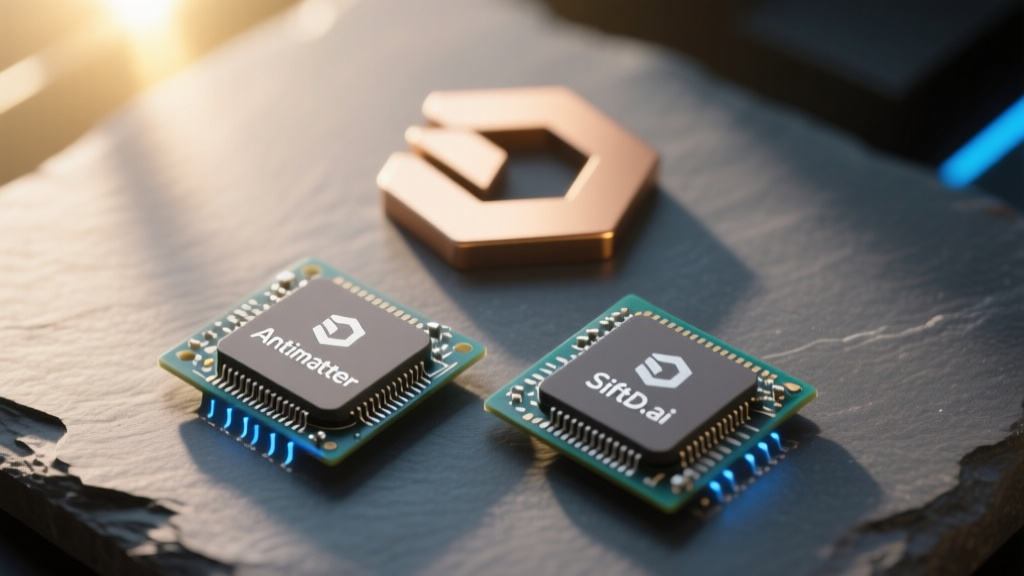
Databricks buys AI security startups—hype or real edge?📷 Published: Apr 14, 2026 at 08:16 UTC
- ★Antimatter and SiftD.ai acquired
- ★AI security as new battleground
- ★Demo tech vs. deployment reality
Databricks just snapped up Antimatter and SiftD.ai, two startups whose names barely register outside niche AI security circles. The acquisitions, funded by its $5 billion raise, are pitched as the foundation for a new AI security product—but the company’s press release is light on specifics. TechCrunch reports the deals closed, yet neither startup has publicly shipped anything resembling a scalable security tool.
This isn’t Databricks’ first AI rodeo. The company has been aggressively expanding its lakehouse platform into AI, but its previous security features—like data governance and access controls—relied on bolted-on partnerships rather than native innovation. The acquisitions suggest a pivot: instead of buying generic compliance tools, Databricks is now betting on specialized AI security tech. Yet, with both Antimatter and SiftD.ai still in stealth mode, the question isn’t just what they’ve built, but whether it works outside a demo environment.
The timing is conspicuous. AI security is becoming a crowded market, with players like Protect AI, HiddenLayer, and even cloud giants offering competing solutions. Databricks’ move could be a preemptive strike—or a sign it’s falling behind. Either way, the company’s messaging frames these acquisitions as a leap forward, not a catch-up play.

The gap between Databricks' $5B war chest and actual product muscle📷 Published: Apr 14, 2026 at 08:16 UTC
The gap between Databricks' $5B war chest and actual product muscle
The real test will be deployment. Antimatter’s website touts "AI-native security," but its GitHub repositories show minimal engagement—a single public repo with fewer than 50 stars. SiftD.ai fares slightly better, with a handful of commits related to AI model monitoring, but neither startup has the kind of open-source footprint that signals mature, battle-tested tech. GitHub activity isn’t everything, but in AI security, where trust hinges on transparency, this opacity is a red flag.
Industry reactions are split. Some developers on Hacker News and Reddit’s r/MachineLearning see this as Databricks doubling down on enterprise AI, while others call it a "Hail Mary" to justify its valuation. The skepticism isn’t unfounded: Databricks’ last major AI security push, Unity Catalog, was met with lukewarm adoption, partly because it felt like a rebranded database tool rather than a true security layer.
For competitors, this is both a threat and an opportunity. If Databricks can integrate these startups’ tech quickly, it could leapfrog rivals like Snowflake, which has been slower to prioritize AI-native security. But if the acquisitions fizzle—or worse, if they’re just repackaged marketing—Databricks risks being seen as a platform that overpromises and underdelivers. The real signal here isn’t the press release; it’s whether next quarter’s enterprise customers are actually deploying these tools, or just kicking the tires.