China’s AI Chip Gap: Five Years Behind, and Counting📷 Published: Apr 14, 2026 at 16:11 UTC
- ★China admits 5-10 year lag in AI chips
- ★AI demand strains equipment and talent supply
- ★Bottlenecks hit passive components and workforce
China’s semiconductor leaders have finally said the quiet part out loud: the country’s AI data center chips are five to ten years behind the competition. Senior executives at a Beijing industry forum admitted the gap last week, framing it not as a temporary hiccup but a structural lag—one that AI-driven demand is actively worsening. The bottleneck isn’t just about fabrication; it’s a perfect storm of missing equipment, scarce passive components, and a workforce stretched to breaking point.
For all the talk of self-sufficiency, China’s chipmakers are still playing catch-up in a game where the goalposts keep moving. Advanced AI chips require tools and materials that the U.S. and its allies have spent decades refining—and many of those are now off-limits to Chinese firms. The irony? The more China doubles down on AI, the more it exposes its own vulnerabilities.
Take passive components, for example. These unsung heroes of chip design—capacitors, resistors, substrates—are often overlooked until they vanish. But when your supply chain is cut off from global suppliers, even the smallest missing part can halt production. Chinese firms are now scrambling to onshore or find workarounds, but that’s like building a plane while you’re already in the air.

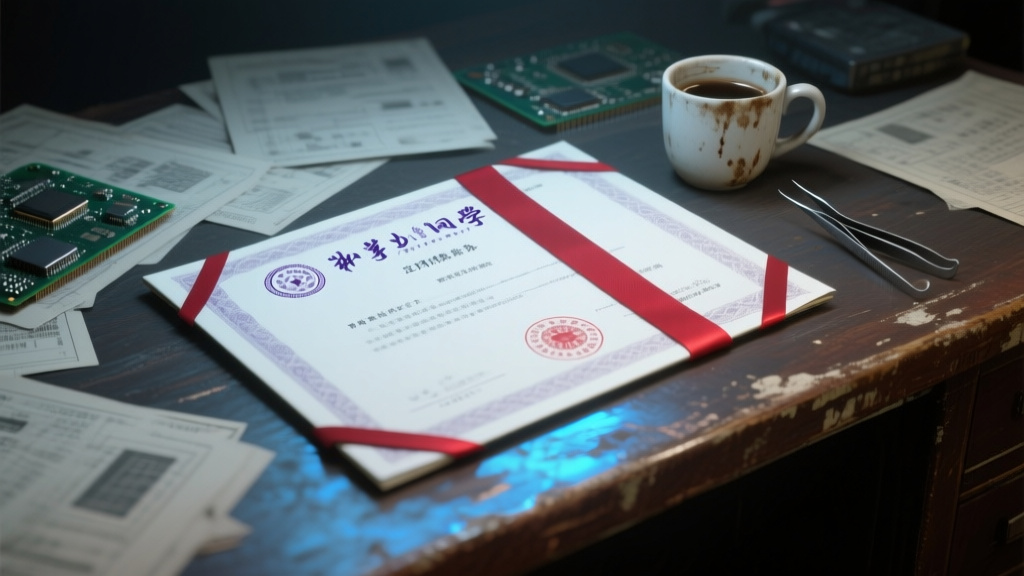
The real bottleneck isn’t silicon—it’s the talent and tools China can’t buy📷 Published: Apr 14, 2026 at 16:11 UTC
The real bottleneck isn’t silicon—it’s the talent and tools China can’t buy
The talent crunch is just as dire. China’s semiconductor workforce has grown rapidly, but demand for AI-specific expertise has outpaced it. The country’s top engineering schools churn out graduates by the million, yet there’s a stark mismatch between what the market needs and what the education system delivers. Meanwhile, U.S. export controls make it harder for Chinese engineers to access cutting-edge training or collaborate with international peers.
Industry maps tell a clear story: Nvidia’s H100 and its successors are widening the gap, not closing it. Chinese alternatives like Huawei’s Ascend or local startups’ offerings are making progress, but they’re benchmarking against last-gen hardware, not the bleeding edge. The real signal here isn’t that China is falling behind—it’s that the country’s AI ambitions are colliding with geopolitical reality.
The developer community has noticed. GitHub discussions and technical forums are rife with frustration over tooling gaps, inconsistent performance, and the sheer difficulty of replicating U.S.-built systems. Some Chinese firms are open-sourcing parts of their stack to rally domestic talent, but that’s a Band-Aid on a bullet wound. The real work—building an ecosystem that can innovate independently—is years away.
For now, China’s AI chipmakers are stuck in a cycle: the more they invest, the more they reveal their own limitations.