Google’s Willow quantum processor: Hype or hardware leap?
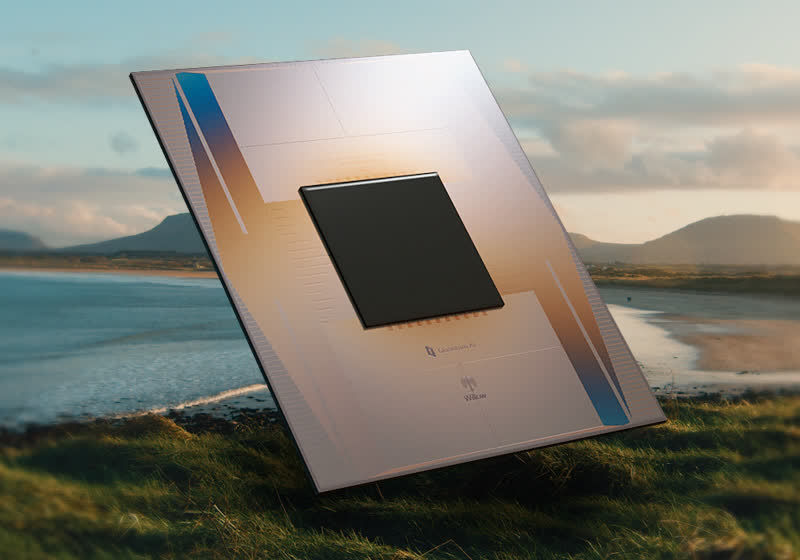
A tiny, hyper-detailed Google Willow quantum processor chip resting on a massive, slate-grey minimalist pedestal, completely enclosed by an imposing,📷 Photo by Tech&Space
- ★Willow's early access locks out public, targets elite researchers
- ★May 15 deadline pressures teams to propose boundary-pushing experiments
- ★Google's quantum play: research tool, not commercial product
Google’s Early Access Program for its Willow quantum processor isn’t a public beta—it’s a controlled sprint for a select few. Researchers have until May 15 to pitch experiments that ‘push the boundaries’ of current hardware, a phrase that’s become quantum computing’s version of ‘just trust us’. The catch? No public access, no transparency on selection criteria, and no guarantees the experiments will scale beyond the lab.
The program’s exclusivity suggests Willow isn’t about democratizing quantum tech—it’s about cornering the research elite. Google’s framing leans hard on ‘advancing the field,’ but the subtext is clearer: this is a benchmarking play. Like its Sycamore processor in 2019, Willow’s real test won’t be raw qubit counts but whether its experiments outpace IBM’s Heron or Amazon’s Braket in practical utility.
Yet the hype filter kicks in when you compare this to Google’s past quantum claims. Sycamore’s ‘quantum supremacy’ demo was a synthetic benchmark—useful for headlines, less so for real-world problems. Willow’s early access follows the same script: demo-first, deployment never. The question isn’t whether the hardware is impressive; it’s whether the experiments will escape the lab.

The gap between benchmark experiments and real-world deployment widens📷 Photo by Tech&Space
The gap between benchmark experiments and real-world deployment widens
The industry map here is straightforward: Google’s betting on researcher lock-in over commercial rollouts. By restricting access, it’s not just testing hardware—it’s cultivating a cohort of academics whose future papers will cite ‘Google Quantum AI’ as the platform of choice. That’s a long-term play against IBM’s Qiskit ecosystem, which at least pretends to welcome outsiders.
Developer signals are muted so far. Quantum forums like Quantum Computing Stack Exchange show cautious optimism, but the pattern is familiar: early access programs rarely translate to open-source momentum. The real signal will come post-May 15, when rejected teams (inevitably) vent on GitHub or arXiv about opaque selection processes.
For all the noise, the actual story is simpler: Google’s quantum strategy remains a research moat, not a product pipeline. The Willow processor might be a technical leap, but its impact hinges on whether the experiments it enables are reproducible outside Mountain View—or just another set of benchmarks for the next press cycle.