© Federal Communications Commission, Source — Wikimedia Commons📷 Photo by Tech&Space
- ★AI antidote
- ★LLMs for facts
- ★Social media fracturing
Eric Levitz discusses how Large Language Models (LLMs) could be an antidote to social media madness, giving us a push towards a shared, fact-based reality. According to Vox, social media has fractured the public discourse, shepherding us into our own bespoke streams of information. This phenomenon is tailored to maximize our attention and reinforce our prejudices. Many think that AI will only accelerate these trends, but what if AI is, in some respects, the antidote to social media?
The article mentions Sam Altman, an AI CEO, but does not attribute any quotes or claims to him in the provided snippet. LLMs have shown promise in generating human-like text, but their ability to combat misinformation is still uncertain. As GitHub activity and technical forums suggest, the developer community is responding to the potential of LLMs with a mix of excitement and skepticism.

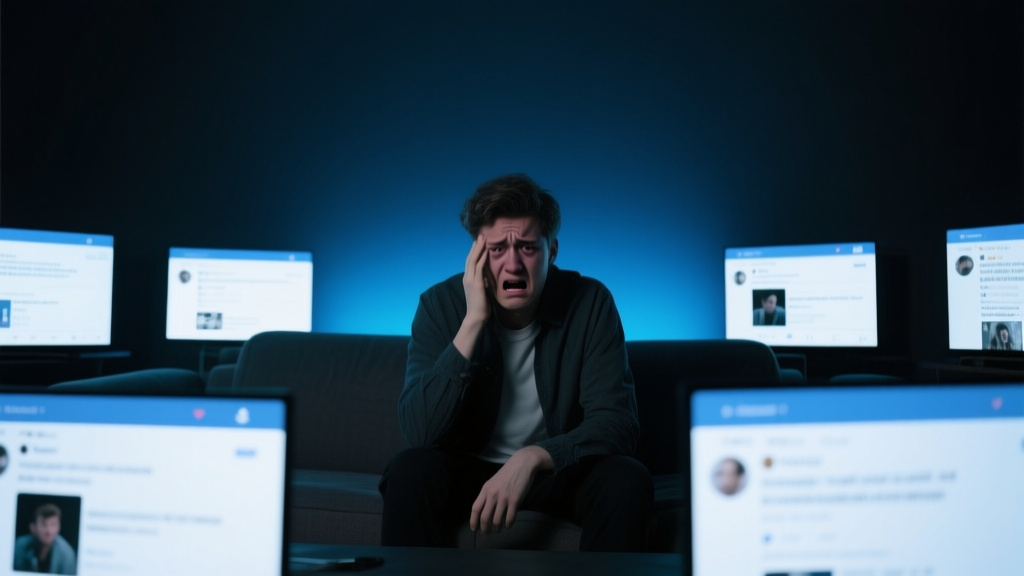
A person sitting on a couch, surrounded by multiple screens displaying conflicting social media posts, with a mix of confusion and frustration on📷 Photo by Tech&Space
The gap between AI promise and social media reality
The real signal here is that AI may not be the primary driver of social media misinformation, but rather a tool that can be used to combat it. For all the noise, the actual story is about how LLMs can help achieve a shared, fact-based reality. According to early signals, it appears that AI may be able to give us a small push towards this goal. However, the reality gap between AI demos and deployment reality is still significant. As the industry map shows, the companies that benefit from AI-powered misinformation detection will be those that can effectively deploy and integrate these technologies.
The community is responding to the potential of AI-powered misinformation detection with a mix of excitement and skepticism. Some users report that AI-powered fact-checking has improved their ability to identify misinformation, while others note that the technology is not yet perfect.