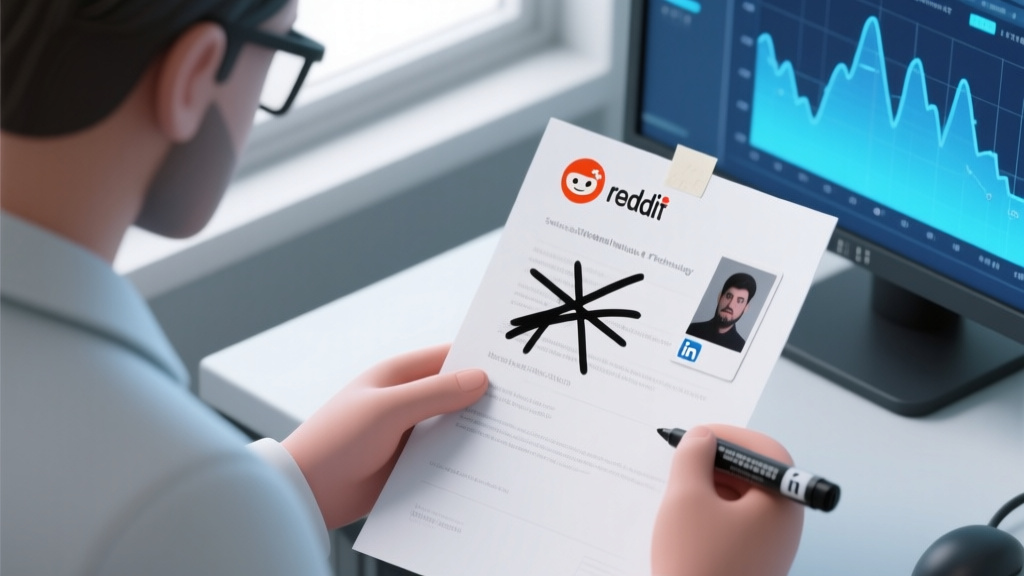
A researcher in a minimalist lab at the Swiss Federal Institute of Technology, holding a printed document with a Reddit username scribbled out in📷 Photo by Tech&Space
- ★Study confirms AI unmasking anonymous accounts
- ★Boss-trashing Reddit alts at risk first
- ★Hype outpaces real-world detection limits
A new study confirms what security researchers have feared for years: AI tools can now unmask anonymous online accounts with unsettling ease. The research, published by a team at the Swiss Federal Institute of Technology, demonstrates that stylometric analysis—once a niche forensic technique—can be automated at scale using large language models. The implications are immediate for platforms like Reddit, X, and Glassdoor, where users often rely on pseudonyms to vent frustrations, critique employers, or discuss sensitive topics.
The study’s findings aren’t just theoretical. By analyzing writing patterns—vocabulary quirks, sentence structure, even emoji usage—AI models can link an anonymous account to a known identity with alarming accuracy. The researchers tested their method on real-world datasets, achieving a 90% success rate under controlled conditions. That’s not just a lab result; it’s a warning shot for anyone who thought their finsta or Glassdoor rant was truly private.
But before panic sets in, a reality check: the study’s benchmark assumes near-perfect data conditions. In the wild, factors like multiple accounts per user, VPN use, or deliberate obfuscation (like writing in all lowercase or using translation tools) can muddy the waters. Still, the trend is clear: anonymity, once a digital shield, is now a leaky umbrella.
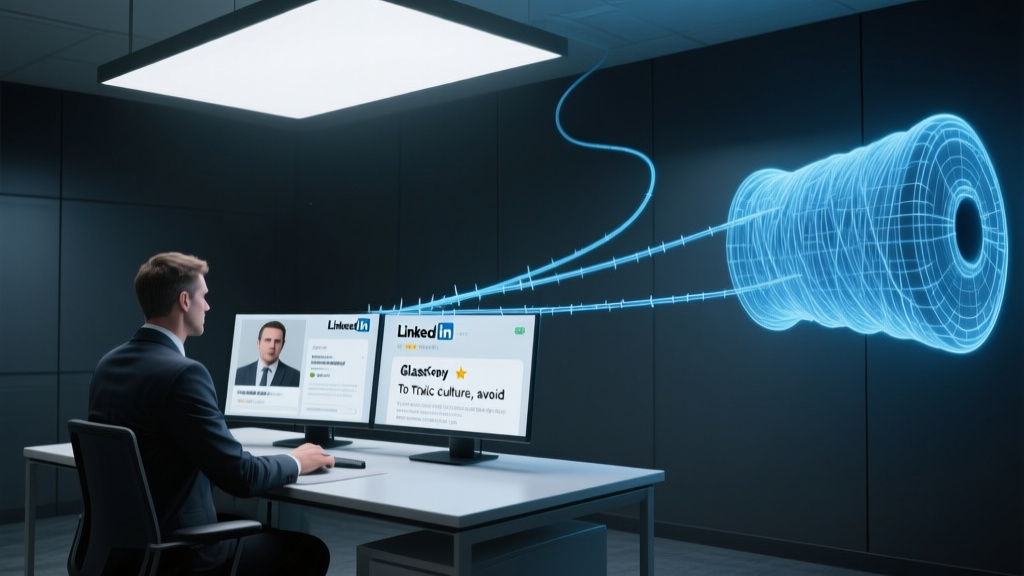
A hiring manager sitting in front of a computer screen displaying a candidate's online activity, with a subtle LinkedIn logo in the corner, and a📷 Photo by Tech&Space
The gap between demo promise and deployment reality
Who stands to gain from this? Platforms like LinkedIn and Microsoft-owned GitHub, where professional reputations are currency, could weaponize these techniques to out whistleblowers or job-hopping candidates. Employers might soon deploy similar tools to sniff out disgruntled employees—or worse, preemptively screen applicants based on their online activity. The real competitive edge, though, goes to the companies building these AI models. Firms like ElevenLabs and DeepL have already dabbled in voice and text fingerprinting, and this study gives them a blueprint for a new product line: identity verification-as-a-service.
The developer community, meanwhile, is split. Some see this as an inevitable evolution of digital forensics, while others warn of a chilling effect on free speech. On GitHub, a handful of open-source projects are experimenting with countermeasures, like AI-generated writing assistants that normalize a user’s prose across accounts. But these are Band-Aids at best. The deeper question is whether anonymity was ever truly sustainable—or just a temporary loophole in the era of big data.
For now, the study’s biggest takeaway is less about the technology itself and more about the shifting power dynamic. Privacy isn’t dead, but it’s no longer default. And that’s a reality even the most secure VPN can’t hide.