Memory Bear AI: Affective memory or repackaged context?📷 Published: Mar 25, 2026 at 12:00 UTC
- ★Persistent affective memory vs. short-term emotion models
- ★Long-horizon dependency claims meet real-world noise
- ★Developer reaction: cautious interest, no code yet
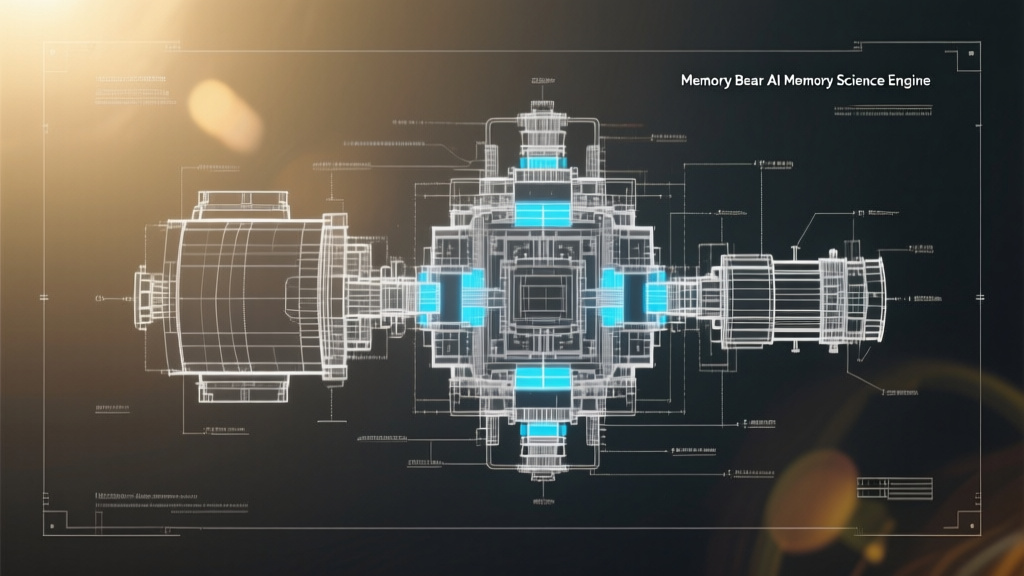
Another week, another AI framework promising to finally understand human emotion—this time with memory. The Memory Bear AI Memory Science Engine arrives with the usual fanfare: a technical report on arXiv, bold claims about 'persistent affective memory,' and the obligatory critique of existing multimodal emotion recognition (MER) systems for being too myopic. The core pitch? Emotions aren’t just about the current frame of a video or snippet of speech—they’re cumulative, contextual, and (here’s the twist) remembered.
The problem isn’t the insight—it’s the execution. Current MER systems do struggle with context collapse, treating a sigh in a boardroom the same as one in a bedroom. But the devil’s in the deployment: prior work on long-horizon dependency modeling in emotion AI has consistently hit walls with real-world noise, where 'accumulated context' often means missing data, biased sensors, or users who lie to their webcams. Memory Bear’s technical report leans hard on synthetic benchmarks (because of course it does), leaving the critical question unanswered: How much does this actually improve in the wild?
Early signals suggest the engine’s strength lies in its memory architecture—a neural module that ‘replays’ past affective states to inform current judgments. That’s a step up from stateless models, but it’s also a feature we’ve seen fragments of in Google’s PaLM-E and Meta’s ImageBind. The real test isn’t whether it can remember, but whether it remembers usefully—and whether that’s enough to justify the hype.

The gap between multimodal emotion benchmarks and messy human interaction📷 Published: Mar 25, 2026 at 12:00 UTC
The gap between multimodal emotion benchmarks and messy human interaction
The competitive angle here is blunt: this is a play for enterprise affective computing, where companies like Affectiva (now part of Smart Eye) and Beyond Verbal have spent years selling emotion-as-a-service to call centers and HR departments. Memory Bear’s memory-centric approach could give it an edge in scenarios where emotional arcs matter—think therapy bots, long-form customer service interactions, or (if you’re feeling dystopian) workplace ‘engagement’ monitoring. But the developer community’s reaction has been tepid so far: interest in the architecture, skepticism about the data, and the usual groaning about arXiv papers that arrive without code.
There’s also the reality gap. The report glides over how this performs with imperfect inputs—when the microphone cuts out, the camera angle is terrible, or the user’s ‘accumulated context’ is a chaotic mess of half-remembered conversations. Benchmarks using curated datasets like IEMOCAP are a start, but they’re not the finish line. And let’s not forget: affective computing has a long, awkward history of overpromising and underdelivering, often while ignoring cultural nuances or, you know, basic privacy concerns.
The open question isn’t whether Memory Bear’s memory module works—it’s whether it works better enough to dislodge incumbents or justify the ethical baggage. Right now, the answer is a firm maybe, buried under layers of benchmark caveats and the kind of ‘technical report’ that reads like a job application for VC funding.