LLM safety gets a math upgrade—but will it outrun attacks?
LLM safety gets a math upgrade—but will it outrun attacks?📷 Published: Mar 24, 2026 at 12:00 UTC
- ★Linear separability of harmful/safe embeddings exploited
- ★ES2 fine-tuning widens gap between risk classes
- ★Defensive arms race: perturbation attacks vs. representation tweaks
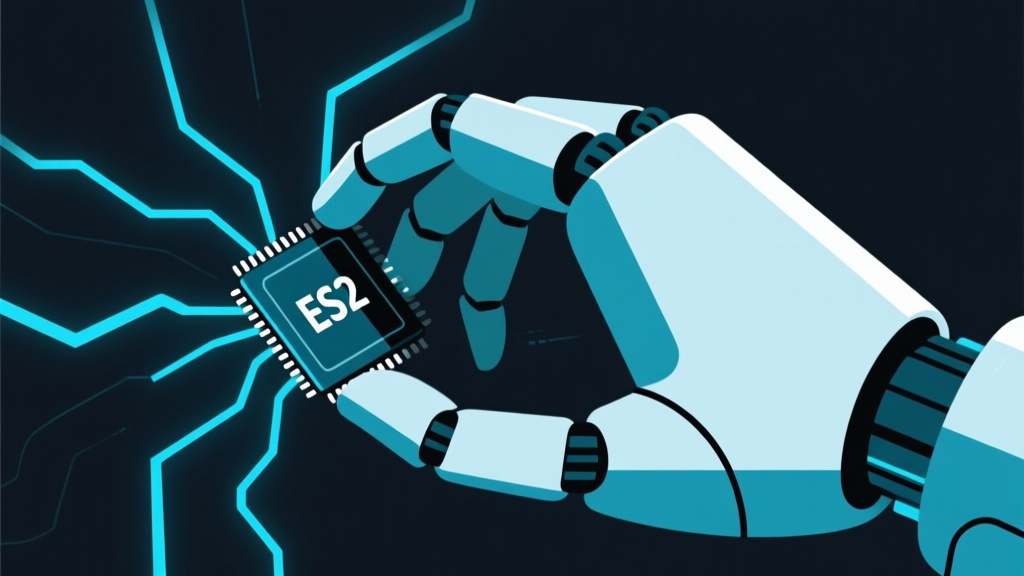
The latest volley in AI’s safety arms race isn’t about bigger guardrails—it’s about geometry. Researchers from arXiv’s newest drop observed that large language models already, somewhat conveniently, organize harmful and safe queries into linearly separable clusters in their embedding spaces. Handily for attackers, this means nudging a toxic prompt’s vector slightly can often slip it past filters. Their fix? A fine-tuning method called Embedding Space Separation (ES2), which actively stretches the distance between the two classes.
The irony here is rich: the same property that makes LLMs vulnerable—neatly segregated latent representations—also gives defenders a lever to pull. ES2 doesn’t invent new math; it weaponizes existing structure. Early signals suggest it works in controlled tests, but as prior work on adversarial embeddings shows, attackers rarely play by benchmark rules.
What’s actually new? Most safety tweaks operate at the output layer (e.g., moderation APIs) or input layer (prompt filters). ES2 intervenes at the representation level—before the model even generates text. That’s a shift, but one with a catch: it assumes the embedding space’s neat separation holds under real-world noise. Developer reactions on GitHub are cautiously optimistic, though some note the approach may struggle with context-dependent harm (e.g., a prompt that’s safe in one culture but toxic in another).

The cat-and-mouse game in embedding space just got sharper📷 Published: Mar 24, 2026 at 12:00 UTC
The cat-and-mouse game in embedding space just got sharper
The competitive implications are clearer. Startups selling LLM safety-as-a-service (e.g., Scale AI’s guardrails) now face a technical moat: if ES2 scales, it could let big players like Anthropic or Mistral bake defense into their base models, undercutting third-party tools. Meanwhile, open-source maintainers—already grappling with jailbreak-as-a-service repos—get another patch to merge, test, and debate.
The reality gap looms large. Synthetic benchmarks (e.g., AdvBench) will cheer; production systems will sigh. ES2’s strength—its reliance on existing embedding structure—is also its weakness. If harmful and safe queries stop being linearly separable in future models (or if attackers train on perturbed embeddings), the whole approach may need retooling. The paper’s own caveats highlight this: ‘effectiveness depends on the initial separability of the embedding space.’
For developers, the signal is mixed. ES2 is open-source-friendly (no proprietary data required), but deploying it means retraining embeddings—a non-trivial lift for cash-strapped teams. The EleutherAI community is already dissecting whether the compute tradeoff justifies the gains over simpler methods like LoRA-based filters.