Meta’s NLLB-200 isn’t just translating—it’s mapping how languages think

The model may be seeing more than words.📷 Future Pulse
- ★The model sees language relations
- ★The signal is real, but weak
- ★The practical value is fine-tuning

Meta’s NLLB-200 was originally sold as a model that could translate 200 languages and tackle the long tail of low-resource translation. A new arXiv study suggests there may be more going on than translation alone. Very large models may not only learn how to map words across languages; they may also pick up deeper relationships between languages themselves. That is an interesting claim, because it suggests the model is carrying more structure than simple translation patterns.
The researchers compared the geometry of NLLB-200’s embeddings with the phylogenetic relationships between languages. They used the Swadesh list and a sample of 135 languages to test whether the model’s internal structure reflected historical language relatedness. The result was weak but significant: the model partly tracks language history. That does not mean it “understands” language like a person, but it does mean the model is encoding more than surface similarity.
For developers, that matters for a very practical reason. If models like NLLB-200 already partially see language relationships, they may be easier to fine-tune for low-resource language families. Hugging Face has already shown how important multilingual models are for speech and translation tasks in underrepresented languages. This study goes one step further and suggests that scale alone may surface latent linguistic structure we did not know how to see before.
The signal is still weak, though. That means we should not jump to the conclusion that the model has some universal grammatical intuition or that it understands every language equally well. Google’s multilingual BERT work still points to a lot of the effect being explainable by data quality and statistical clustering. So this is an interesting clue, not the final answer.
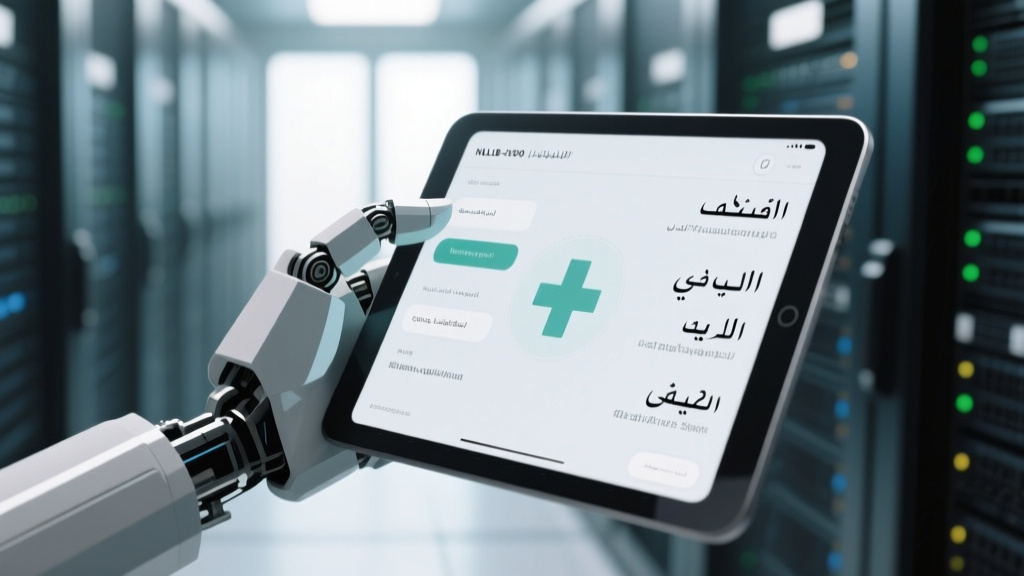
The question is whether this is understanding or just good data geometry.📷 Future Pulse
A new analysis suggests translation models may understand language deeper than expected
The real value of the finding is practical. If the model captures deeper language relationships, it could improve localization, medical translation, and education tools. Projects like Mozilla Common Voice could use this to prioritize data collection and language expansion more strategically. That is a concrete payoff from a study that is otherwise quite academic.
For linguists, the story also opens the same old AI question in a new language: did the model actually learn something real, or did it just arrange the data well? The answer, for now, is somewhere in between. That is enough to be interesting, but not enough to be final.
In that sense, NLLB-200 is more than a translation engine. It is a mirror showing how connected languages may be beneath the surface. And that is already a good enough story, even before we fully explain why it works.