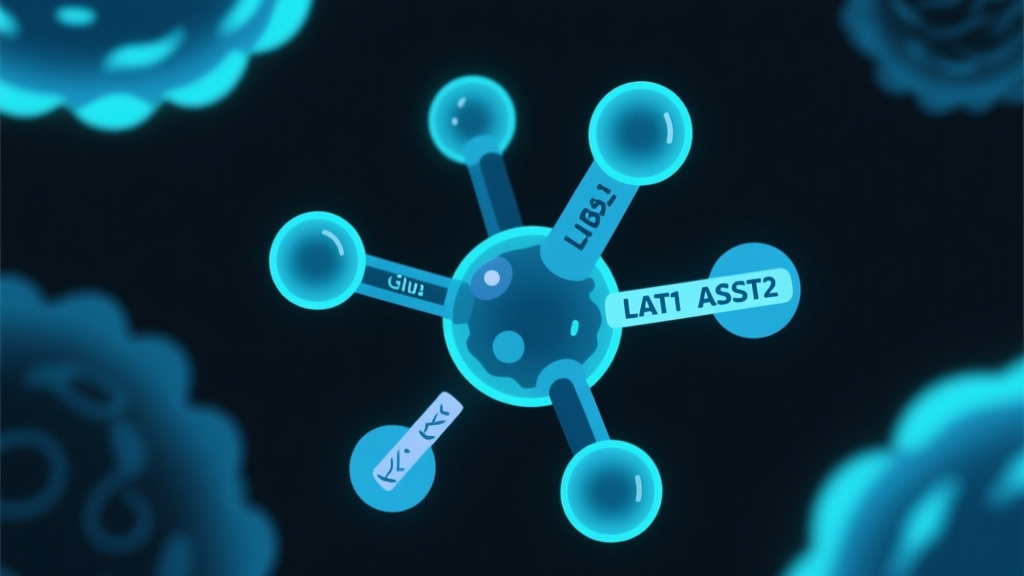
The old route into tumors may not be the only one.📷 Future Pulse
- ★A new transporter changes the route
- ★Preclinical data are promising, not final
- ★Clinical trials remain the real test

Science Tokyo has made an important turn in boron cancer therapy: instead of using the standard LAT1 transporter, the new formulation targets ASCT2, a transporter expressed in more aggressive tumors. That matters because much of boron neutron capture therapy has depended on one main entry route, which limited the kinds of tumors it could reach. MedicalXpress reports that the GluBs agents successfully entered cells and slowed tumor growth in preclinical models.
So this is not just another version of the same formula. ASCT2 is a different route, and that is crucial for tumors that do not respond well to standard therapies. Science Tokyo and related research sources say the agents showed both safety and efficacy in lab and animal tests. That is an important step, but still only the first step. In oncology, the path from mouse to patient has a habit of consuming most promising ideas.
That is why the right reaction is caution, not celebration. Preclinical results can look excellent, but human biology is not a petri dish. Tumors are heterogeneous, metabolism is messy, and side effects that do not show up in the lab often become decisive only in clinical trials. The real value of this work is that it identifies a new biological entrance, not that it already offers a finished treatment.
Still, the research and market implications are real. If ASCT2 proves to be a wider and safer therapeutic window, boron therapy could enter a new wave of trials and partnerships. That would matter especially for glioblastoma and aggressive breast-cancer subtypes, where every extra option counts. But until human data arrive, this remains a promise rather than a solution.
The question is whether this entry survives in the human body.📷 Future Pulse
ASCT2 could open therapy for tumors that were effectively closed
The biggest practical question is whether the ASCT2 route can stay selective enough to spare healthy tissue. ASCT2 is not exclusive to tumors, so the safety profile has to be precise. The National Cancer Institute and similar oncology sources have long warned that most candidates in this space look good in the lab but fail in the clinic. That is why trial design and biomarkers matter as much as the compound itself.
If ASCT2 proves to correlate with treatment response, the door opens to companion diagnostics and much sharper patient selection. That would be the real shift: less broad trial-and-error, more targeted therapy for the people who actually need it. For now, though, this is still a very interesting, very promising, and very early signal.
In other words, boron agents are not proof that cancer is solved. They are proof that it can be worth looking for another entry point. In medicine, that already counts as a major story.